
Three Races In, and F1 2026 Is Already in Crisis
Just three races into the 2026 F1 season, and the sport is facing its biggest controversy in years. Four-time World Champion Max Verstappen has openly considered retiring at the end of the season, driver discontent with the new regulations is escalating race by race, and Oliver Bearman’s terrifying 50G crash has thrust safety concerns into the spotlight.
All eyes are now on the FIA’s emergency meeting in London on April 9th. What exactly is going on?
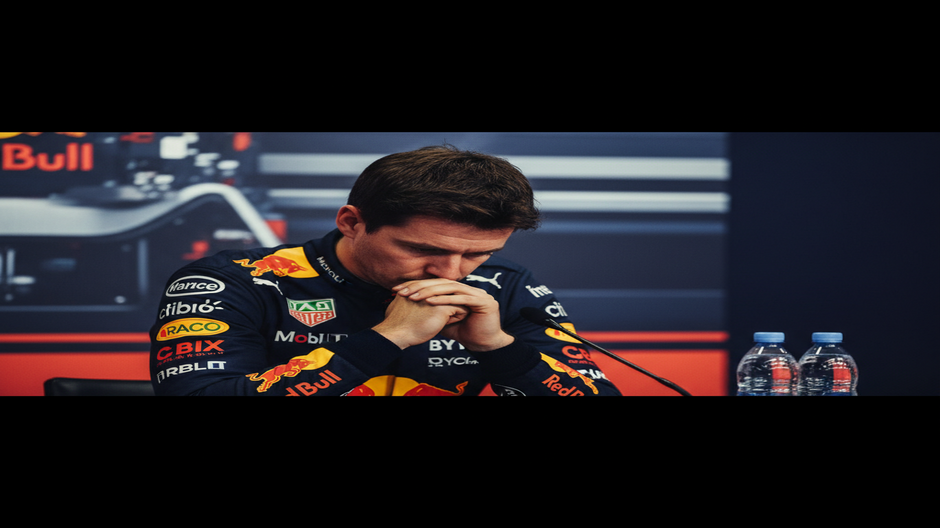
Verstappen’s Retirement Talk — “Is It Worth It?”
Verstappen’s frustration didn’t start overnight. Here’s the timeline of how F1’s most dominant driver of the modern era went from world champion to questioning his entire career.
February — Bahrain Pre-Season Test
After his first taste of the new car, Verstappen didn’t hold back. The four-time champion, known for his blunt honesty, immediately drew a comparison that sent shockwaves through the paddock:
“Formula E on steroids.”
“To drive, not a lot of fun, to be honest. Management.”
“Maybe it’s then better to drive Formula E, right? Because that’s all about energy efficiency and management.”
At the time, many dismissed these comments as typical pre-season frustration. Verstappen has historically been critical of regulation changes. But what followed proved this was different.
March — Chinese GP: Full-Blown Rant
After retiring from the race in Shanghai due to a battery management error — an issue that simply didn’t exist under previous regulations — the criticism escalated to a level rarely seen from an active world champion:
“It’s terrible. If someone likes this, then you really don’t know what racing is about.”
“Boost to pass, then you run out of battery the next straight, they boost past you again. It’s playing Mario Kart. This is not racing.”
“Fundamentally flawed.”
The “Mario Kart” comparison went viral immediately. Within hours, it became the defining soundbite of the 2026 season, shared millions of times across social media. It also forced the FIA to acknowledge that driver feedback about the new regulations was more than just noise.
March 29 — Japanese GP: The BBC Bombshell
After qualifying Q2 elimination — something almost unimaginable for a four-time champion — and finishing P8 at Suzuka, Verstappen sat down with BBC Sport and delivered the most personal, vulnerable interview of his entire career:
“Is it worth it? Or do I enjoy being more at home with my family?”
“I am not enjoying what I’m doing.”
“Every day I wake up, I convince myself again. And I try.”
“I’m beyond frustrated.”
Verstappen is contracted to Red Bull until 2028 at approximately $70M per year, making him one of the highest-paid athletes in the world. But the deal includes a 2026-specific performance exit clause — a provision negotiated precisely for a scenario like this. He’s already confirmed for the Nurburgring 24 Hours endurance race in June and has expressed serious interest in competing at Le Mans. Plan B isn’t just ready — it’s attractive.
What If Verstappen Actually Leaves? — The Ripple Effect
Verstappen’s retirement wouldn’t just affect Red Bull. It would reshape the entire F1 landscape.
For Red Bull, the loss would be catastrophic. Verstappen has been the team’s talisman since 2016, delivering four consecutive championships from 2021 to 2024. His departure would trigger a scramble for a replacement, with Liam Lawson the likely internal promotion — a significant downgrade in raw pace.
For F1 as a commercial product, losing its biggest star mid-contract would send a devastating message. Verstappen’s fanbase — particularly in the Netherlands, where F1 viewership tripled during his championship years — represents millions of eyeballs and significant sponsorship value. Liberty Media, F1’s owner, has invested heavily in building the sport around star drivers. Losing the brightest one to regulation frustration would be a PR disaster.
For the driver market, it would create a domino effect. Every team would reassess their lineup. Every contract negotiation would be affected. The 2027 silly season would begin before the 2026 season is even half over.
Perhaps most importantly, it would set a precedent. If the greatest driver of his generation walks away because the cars aren’t fun to drive, what does that say about the sport’s direction?
2026 F1 Regulations Explained — What Actually Changed?
Power: 50/50 Engine and Electric
Previously, the internal combustion engine dominated the power equation, contributing roughly 75% of total output. In 2026, the MGU-K electric motor output tripled from 120kW to 350kW, making it a near-equal split with the engine. The MGU-H — the complex heat energy recovery system that scavenged energy from exhaust gases — was removed entirely. And for the first time in F1 history, sustainable fuels are mandatory.
In plain terms: battery management is now the centerpiece of race strategy. Drivers must constantly balance when to deploy electric power, when to harvest it, and how to manage the energy deficit across an entire race distance. This fundamental shift is at the heart of every complaint on the grid.
Aerodynamics: DRS Gone, Active Aero In
The iconic DRS — Drag Reduction System, introduced in 2011 — is gone. In its place: active aerodynamics with movable front and rear wing elements that can change shape mid-lap.
- Z-Mode (Corner): Wings closed for maximum downforce — the car grips harder through turns
- X-Mode (Straight): Wings open for minimum drag — the car slices through the air on straights
Unlike DRS, which was only available to a trailing driver within one second, every driver can use active aero on every lap, regardless of position or gap. The theory was beautiful: natural overtaking through superior racing, not an artificial push-to-pass button. The reality has been more complicated.
Car Dimensions: Smaller, Lighter, Nimbler
Minimum weight drops from 800kg to 768kg. Wheelbase and floor width are reduced. The goal was a more agile, responsive car that could follow other cars more closely through corners. But teams are struggling to hit the weight target due to the significantly larger battery pack required for the increased electric output. Several teams arrived at pre-season testing overweight, forcing compromises in other areas of car design.
New Teams: Audi and Cadillac
Audi enters as a works team after acquiring Sauber, bringing German automotive engineering prestige back to the grid. Meanwhile, Cadillac joins with Ferrari power units — the first expansion to 11 teams since Haas entered in 2016. The expanded grid means 22 cars on track, more overtaking opportunities, and — in theory — more entertainment for fans.
What Is “Super Clipping”? — The Core Technical Problem
To understand why drivers are so frustrated, you need to understand “super clipping” — the most critical technical issue of the 2026 regulations.
Super clipping occurs when the car suddenly loses speed even though the driver has the throttle fully pressed. Why? The battery harvesting system automatically activates even at full throttle, diverting part of the engine’s output to charge the battery instead of driving the wheels.
Think of it like running a demanding game on your phone while fast-charging simultaneously — performance drops. Same principle, except at 200+ mph with another car inches behind you.
The phenomenon is most dangerous at the end of straights. As a car approaches a braking zone, the harvesting system kicks in, causing a sudden and unpredictable speed loss. The car behind, potentially at full deployment, arrives at a drastically different speed. This speed differential — sometimes exceeding 50 km/h — is exactly what caused the Bearman crash at Suzuka.
Even George Russell’s pole position lap in Australia showed awkward speed traces at the end of straights. Onboard data revealed moments where the car decelerated despite full throttle input. This isn’t driver error — it’s a structural flaw in the energy management regulations.
The Qualifying Crisis — F1’s Crown Jewel Is Tarnished
F1 qualifying has always been about that one magical lap — pushing absolutely everything to the limit under immense pressure in Q3. It’s the purest expression of driver skill in motorsport. In 2026, that’s no longer possible.
With the maximum energy harvest set at 9.0MJ, drivers need excessive charging time between qualifying laps. After pushing for one hot lap, they must “lift and coast” — releasing the throttle and coasting through sections of the track — to recharge for the next attempt. The result? Qualifying sessions that look more like energy management exercises than heroic displays of speed.
Charles Leclerc, known for his spectacular qualifying performances, explained the problem with visible frustration:
“In the past, my strength was taking risks in Q3 and pushing to the limit. Now, if I do that, the engine side falls into chaos.”
The situation was so dire that the FIA emergency-adjusted the qualifying energy limit from 9.0MJ to 8.0MJ before the Japanese GP qualifying session — a mid-weekend rule change that is virtually unprecedented in F1 history. That the governing body felt compelled to change regulations between practice and qualifying tells you everything about the severity of the problem.
Driver Reactions — A Divided Grid
The Critics: “This Isn’t Racing”
Lando Norris (McLaren), the 2025 championship runner-up, has been almost as vocal as Verstappen:
“F1 went from the best car to the worst car in one regulation change.”
“It doesn’t matter what we say. It doesn’t get reflected in the regulations.”
Fernando Alonso (Aston Martin), the 44-year-old veteran competing in his 23rd F1 season, offered perhaps the most technically precise criticism:
“It’s a Battery World Championship.”
“High-speed corners became the charging station. You go slower to charge, then full power on the straight. Driver skill is not really needed anymore.”
“Overtakes are unintentional — most are caused by energy differences, not driver ability.”
Liam Lawson (Racing Bulls) said he was “mentally drained” after the Japanese GP, describing the cognitive load of managing energy systems as overwhelming compared to previous seasons.
The Supporters: “The Racing Is Actually Fun”
Lewis Hamilton (Ferrari), the seven-time champion in his second season at Maranello, initially praised the racing after Melbourne — “I personally loved it” — but shifted tone significantly after the chaos of Suzuka:
“I’m not expecting much from the meeting. Too many cooks in the kitchen never works.”
“Drivers have no power. We’re not in the committee. We don’t have a vote.”
Charles Leclerc (Ferrari) called the qualifying rules “a f**king joke” in a post-session radio message that was broadcast live to millions. Carlos Sainz (Williams), now serving as GPDA director, took a more measured approach: “Fix qualifying, leave the racing alone.”
Team Principals — Conflicting Interests
Toto Wolff (Mercedes) — leading the constructors’ championship with Antonelli and Russell’s dominant performances — is naturally defending the rules:
“No one can complain about the lack of beauty in the races.”
“The race is not the issue — we need to work on qualifying. We’ll address this in London on April 9th.”
Fred Vasseur (Ferrari) — also benefiting from a competitive car — echoed the supportive stance:
“Overall it’s good for F1, good for the championship, good for everyone.”
“If we start fighting because ‘we have an advantage on the battery’ — that’s the worst case scenario for F1.”
Andrea Stella (McLaren), whose team has dropped from 2024 constructors’ champions to midfield, asked stakeholders not to “undermine” the regulations while calling for three targeted fixes: starts, overtaking, and lift-and-coast management.
Laurent Mekies (Red Bull) denied any retirement discussions with Verstappen, offering a confident — some might say optimistic — assurance: “By the time we give him a fast car, he will be a much happier Max.”
Mercedes’ “Compression Ratio Trick” — Engineering at the Edge
There’s a reason Mercedes has been dominant with Antonelli winning two of the first three races. Their engineers found a loophole in the compression ratio rules that gives them a tangible power advantage.
The 2026 regulations limit engine compression ratio to 16:1, measured at cold conditions. Mercedes engineers realized that at operating temperatures — around 110°C for the cylinder head — piston thermal expansion effectively increases the real compression ratio beyond 16:1. They’re not technically breaking the rule as written, but extracting more power than anyone else from the same fuel allocation.
The FIA has responded swiftly: from June 1st, both cold and hot measurements will be required for compression ratio compliance. But until then, Mercedes’ advantage persists through at least four more races. Wolff himself acknowledged the incoming rule change poses a “danger” to their competitive edge — a rare admission from a team principal riding a winning streak.
Bearman’s 50G Crash — Safety Cannot Wait
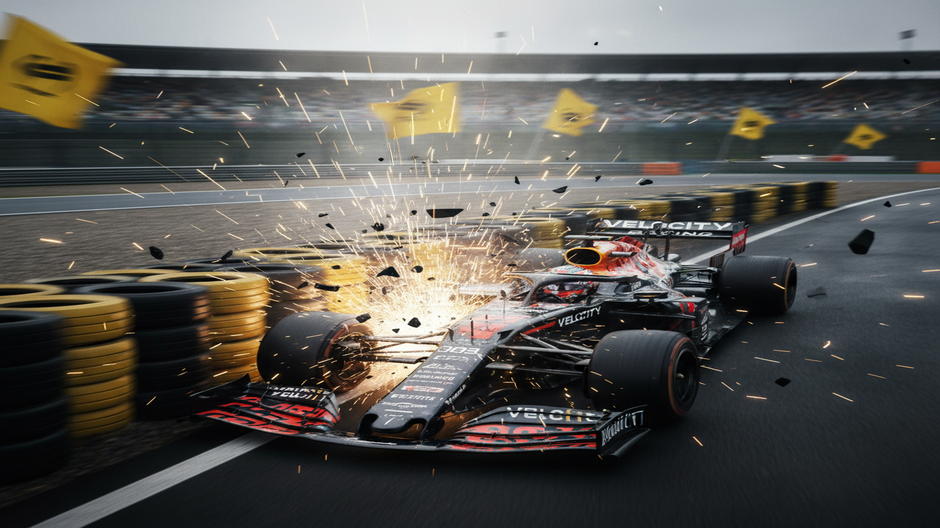
What turned emotional complaints into urgent action was Oliver Bearman’s horrific crash at Suzuka — an incident that could have been fatal at a different circuit.
At the high-speed Spoon corner, Bearman’s Haas encountered Franco Colapinto’s Alpine mid-harvest — meaning Colapinto’s car was actively charging its battery and had slowed significantly. The result was a 50 km/h speed differential between two cars in the same corner. Bearman, arriving at 190+ mph, had no time to react. The resulting loss of control sent him into the barriers at 50G — an impact force equivalent to a car hitting a concrete wall at over 100 mph.
“An enormous speed differential that I’ve never seen in F1 before these new regulations.” — Oliver Bearman
Bearman walked away physically unharmed — a testament to modern F1 safety structures including the halo device and reinforced survival cell. But the implications were terrifying. GPDA director Carlos Sainz issued a stark warning that resonated across the entire motorsport community:
“If this happens at Baku, Singapore, or Las Vegas — where there are walls instead of gravel traps — it’s game over.”
The crash made it impossible to dismiss driver complaints as self-interest. This was a genuine safety emergency, and it directly triggered the April 9th FIA emergency meeting.
The ADUO Framework — A Safety Net for Struggling Manufacturers
One fascinating addition to the 2026 regulations is the ADUO (Additional Development and Upgrade Opportunities) framework, designed to prevent any power unit manufacturer from falling hopelessly behind.
Power unit manufacturers that fall more than 2% behind the benchmark in performance receive extra development time, additional dyno testing hours, and mid-season upgrade permissions that other manufacturers don’t get. It’s essentially a handicap system for engine development — something F1 has never attempted before.
Red Bull Powertrains, in their first year as an independent engine manufacturer, and Audi, a complete newcomer to F1 power units, are the most likely candidates for ADUO assistance. But the framework raises uncomfortable questions: How exactly is “2% behind” measured? At which circuits? Under what conditions? And does artificially boosting struggling manufacturers undermine the competitive spirit that defines F1?
The Political Divide — Why a Fix Won’t Be Easy
Perhaps the most fascinating dimension of this crisis is the political divide that runs straight through the paddock. The teams with competitive cars — Mercedes and Ferrari — are defending the regulations. The teams struggling — Red Bull, McLaren, Aston Martin — are demanding change. This isn’t a coincidence.
Wolff and Vasseur know that any major rule change could erase the engineering advantages their teams have spent hundreds of millions developing. Their battery management solutions, their energy recovery strategies, their compression ratio interpretations — all of this could be rendered worthless by a regulation reset. Of course they want stability.
Stella at McLaren and Mekies at Red Bull know the current rules disadvantage their packages. McLaren’s aerodynamic philosophy, which dominated 2024 and 2025, doesn’t translate to the 2026 car concept. Red Bull’s first in-house power unit is clearly behind. Of course they want change.
Getting unanimous — or even majority — agreement from 11 teams with diametrically opposed commercial interests is F1’s eternal challenge. And with Verstappen’s future hanging in the balance, the stakes have never been higher.
April 9th FIA London Meeting — What Can Change?

The FIA, F1 management, all 11 teams, and all four power unit manufacturers will convene in London on April 9th for what could be the most consequential meeting in recent F1 history.
Short-Term Fixes (Before Miami GP on May 1st)
- Harvesting energy cap reduction: 9MJ → 8MJ (already applied at Suzuka), potentially down to 5-6MJ to reduce lift-and-coast severity
- MGU-K harvesting power increase: 250kW → 350kW (shorter charging time = less time spent in energy deficit)
- Deployment power reduction: 350kW → 200kW (spread energy deployment across the full length of a straight, reducing the “boost and bust” pattern)
- Qualifying active aero freedom: Allow unrestricted active aero usage during qualifying to improve the spectacle
Medium-Term (2027+)
- Power split adjustment: 50:50 → 60:40 ICE-favored. This would fundamentally rebalance the power unit, but requires manufacturer redesign that’s impossible for 2026.
However, Wolff and Vasseur are expected to resist major changes — their teams benefit enormously from the current rules. Any regulatory change requires a supermajority in the F1 Commission, making meaningful reform extremely difficult when the top two teams oppose it.
Verstappen’s message to the FIA was characteristically direct:
“They know what to do.”
Kimi Antonelli — The Silver Lining of F1 2026
Amid the chaos and controversy, there is one undeniably positive story emerging from the 2026 season: Kimi Antonelli.
The 19-year-old Italian, handpicked by Toto Wolff as Lewis Hamilton’s replacement at Mercedes, has won two of the first three races and leads the championship. He’s the youngest championship leader in F1 history, breaking a record that had stood since Sebastian Vettel’s early career.
Antonelli’s adaptation to the 2026 regulations has been remarkable. While experienced veterans struggle with energy management, the young Italian — who grew up racing electric karts — seems to intuitively understand the energy deployment rhythm. His qualifying performances have been consistently strong, and his race craft belies his age.
Whether his dominance is purely Mercedes’ car advantage or genuine generational talent remains to be seen. But Antonelli represents exactly the kind of new star F1 needs if Verstappen follows through on his retirement threat.
2026 Championship Standings After Round 3
| Round | Winner | P2 | P3 |
|---|---|---|---|
| R1 Australia | George Russell | Antonelli (+2.9s) | Leclerc (+15.5s) |
| R2 China | Antonelli | Russell (+5.5s) | Hamilton (+25.3s) |
| R3 Japan | Antonelli | Piastri (+13.7s) | Leclerc (+15.3s) |
Five Weeks to Miami — F1’s Future Hangs in the Balance
With Bahrain and Saudi Arabia cancelled due to the Middle East conflict, there’s a five-week gap between Japan (March 29) and Miami (May 1). This extended break is both a blessing and a curse — more time for the April 9th meeting to produce results, but also more time for tensions to escalate and positions to harden.
The Miami International Autodrome will be the first real test of whatever changes emerge from London. It’s a street circuit with walls — exactly the type of venue where speed differentials from super clipping could be catastrophic. If the FIA fails to act, Miami could be the race that defines the 2026 season for all the wrong reasons.
If April 9th produces meaningful changes, Verstappen may reconsider his future. If it doesn’t, the sport could lose its biggest star by season’s end. The next five weeks will determine whether the 2026 regulations are remembered as a bold step forward — or the moment F1 lost its way.
One thing is certain: F1 2026 is hotter off the track than on it.