

Chelsea’s Decline: Why Are They Struggling So Much? An In-depth Analysis of Complex Factors 🔥
Hello, this is Toaster! Besides F1, I’m a huge football fan, and I passionately support the Blues, Chelsea. But these days, watching Chelsea’s games just breaks my heart. It’s really hard to enjoy watching them play. With all this frustration about what’s wrong and why our Chelsea isn’t like before, I decided to write this article. Today, I, Toaster, will delve deep into the various complex reasons behind Chelsea’s recent struggles.
Frequent Managerial Changes and Tactical Chaos: Chelsea’s Dilemma
When we talk about Chelsea’s struggles, the first thing that comes to mind is the frequent changes in management. Since the Todd Boehly consortium takeover, Chelsea has gone through several managers, and throughout that process, tactical consistency has been hard to find. Former manager Enzo Maresca, in particular, was heavily criticized for disrupting team consistency with frequent rotations. He even earned the nickname ‘Tinkerman’ for changing the starting lineup a whopping 85 times in just 16 games. While Maresca explained that he believed in finding the optimal plan for each match, this often led to confusion among players and hindered consistent performance.
Ultimately, Maresca was sacked in January 2026 due to poor results and conflicts with the club’s hierarchy over player recruitment. He even hinted at a lack of support within the club, calling it “the worst 48 hours since I came to Chelsea.” These managerial changes significantly impacted the squad. Enzo Fernández openly expressed his dissatisfaction with Maresca’s dismissal, stating, “I don’t understand it,” “It ruined everything,” and “It was a big blow.” This suggests significant confusion and discontent within the squad.
Even under the current manager, Liam Rosenior, Chelsea has struggled, recording four consecutive losses and three consecutive games without scoring. Rosenior cited the congested fixture schedule as one of the reasons for the slump, and the club’s stance is to evaluate him after he has managed at least 70 games, rather than sacking him immediately. However, whether this strategy can overcome Chelsea’s crisis remains to be seen.
Excessive Player Acquisitions and Squad Imbalance: The Paradox of a Bloated Squad
Another chronic issue for Chelsea is excessive player recruitment. Since the Todd Boehly consortium takeover, Chelsea has invested an astronomical sum exceeding £1 billion (approximately ₩1.89 trillion). However, despite this massive investment, they couldn’t escape criticism for indiscriminate and philosophyless signings. At one point, the first-team squad swelled to 37 players, making it difficult for managers to effectively manage the team. Frequent lineup changes led to a lack of team continuity and made it hard for players to develop chemistry, creating a vicious cycle.
Furthermore, the frequent long-term injuries of key players like Wesley Fofana, Reece James, and Christopher Nkunku have also significantly impacted Chelsea’s performance. The absence of crucial players at important moments made it challenging to deploy the full squad, inevitably affecting game results. While these players were brought in for hefty sums, their inability to showcase their skills due to injuries has left fans deeply disappointed.
Player Skill Issues and Lack of Finishing: An Unresolved Challenge
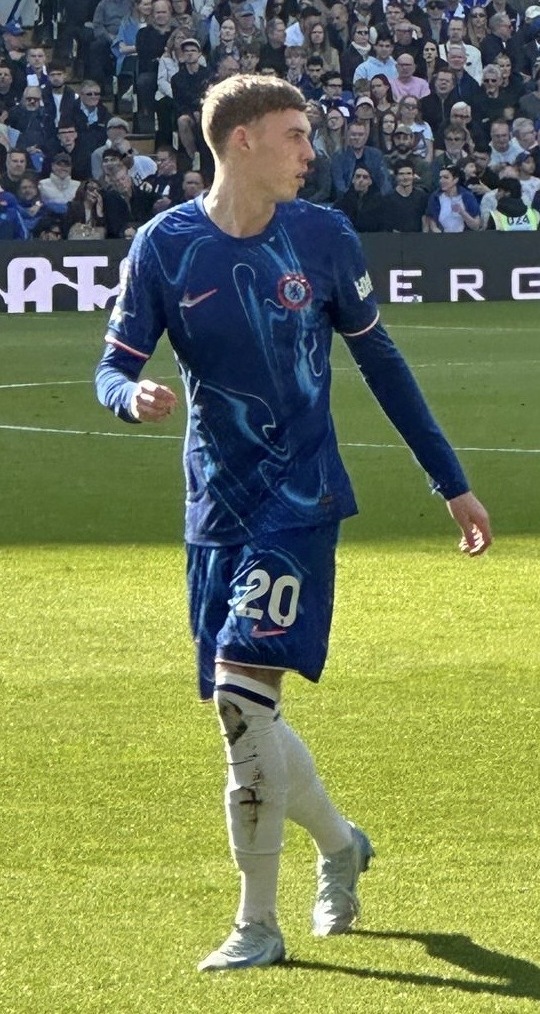
No matter how good the tactics and squad are, ultimately, games are won by individual player skill and finishing ability. Currently, Chelsea’s attack, with the exception of Cole Palmer, is generally suffering from a lack of finishing. Opportunities are often squandered in front of goal, and crucial passes are often lacking, drawing sighs of frustration from fans. Goal-scoring is directly linked to victory, making the attacking slump one of Chelsea’s biggest challenges.
Defensive errors and goalkeeping mistakes are also problematic. Goalkeeper Robert Sánchez, in particular, made fatal misjudgments that led to goals, becoming a decisive factor in the team losing points. Defense is not just about stopping goals; it’s a critical element that ensures the team’s overall stability. Such errors inevitably harm team morale. Moreover, there’s analysis suggesting that the team’s atmosphere deteriorated after Mykhailo Mudryk’s positive doping test, and some players like Noni Madueke have been criticized for work ethic issues, further contributing to a decline in overall team morale.
Club’s Financial Difficulties: The Shadow of a Prestigious Club
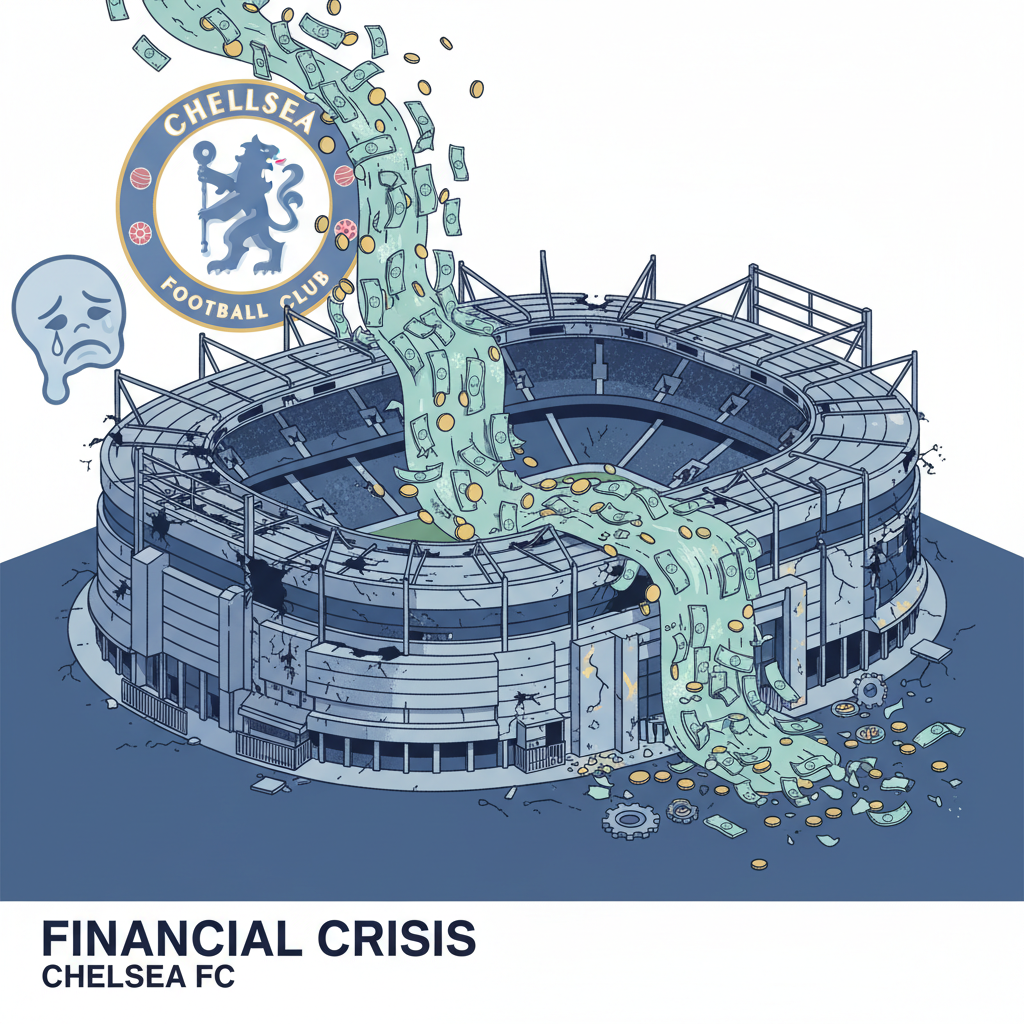
Chelsea’s struggles are not confined to the pitch. The club’s financial problems are also severe. In the 2024-2025 season, Chelsea recorded the largest pre-tax loss in Premier League history, £355 million (approximately ₩690.4 billion), becoming the second club in European football history to suffer such a significant loss. This is because ticket, marketing, and merchandise revenues are significantly lower than those of rival teams, while player wage expenditure ranks sixth highest in Europe.
These financial difficulties are also impacting the club’s transfer market strategy. They might be forced into reckless signings for immediate results or have to sell key players to comply with Financial Fair Play (FFP) regulations. Financial pressure negatively affects long-term team building and ultimately leads to a weakening of the team’s competitiveness.
Other Factors: A Confluence of Issues
Beyond the main reasons mentioned above, several other complex factors are contributing to Chelsea’s struggles. Opposing teams often employ defensive tactics that effectively block Chelsea’s attacking routes, causing them difficulties. Furthermore, a recent incident where the starting lineup for a Champions League match was leaked externally negatively impacted team morale. The sight of players conversing with the referee before games has also drawn criticism for undermining the referee’s authority, highlighting various off-pitch issues.
With these issues converging, Chelsea is currently striving to rediscover its identity. Fan expectations are high, but reality is proving tough.
Chelsea’s Path Forward: Finding Hope
So far, we’ve explored various reasons behind Chelsea’s struggles, and I, Toaster, feel incredibly disheartened. However, Chelsea is undoubtedly a powerful big club. To overcome this crisis and reclaim their former glory, I believe several crucial changes are needed.
First, they must maintain a consistent managerial system with a long-term vision. Frequent managerial changes only destabilize the team’s identity and cause confusion among players. Second, when it comes to player recruitment, they must carefully sign players who fit the team’s tactics and philosophy, rather than simply bringing in expensive ones. It’s crucial to streamline the bloated squad and build a team that can maximize teamwork.
Third, alongside improving individual player skills, training and effort are needed to enhance the team’s overall finishing ability. In particular, improving the attacking line’s finishing and the defensive line’s concentration is urgent. Finally, the club must secure financial stability and work to restore trust through communication with fans. Transparent club management and a willingness to listen to fan voices are essential.
Of course, all these changes won’t happen overnight, but if Chelsea confronts these issues and consistently works towards improvement, I, Toaster, believe they can certainly reignite the blue heart again. Why don’t we, as fans, continue to support Chelsea and hold onto hope without despair? I sincerely hope to see Chelsea dominating the Premier League and Champions League once again! COME ON CHELSEA! 💙