
Miami’s done, and the season’s narrative just rotated firmly back to Mercedes. Kimi Antonelli took pole-to-win for his third victory of 2026 — and became the first driver in F1 history to convert his first three pole positions into wins. The 19-year-old championship leader drove like an actual champion on Sunday.
The race itself was anything but quiet. Antonelli, Verstappen, and Leclerc had a three-way Turn 1 lockup; Verstappen spun out moments later. Isack Hadjar and Pierre Gasly crashed in separate incidents, triggering an early Safety Car. Mercedes nailed the undercut. Antonelli held off Norris by 3.264s through the closing stint despite radio messages about gearbox temperature, paddle response, and throttle mapping concerns. Let’s break it down.
Turn 1 chaos — Verstappen spins, Safety Car deployed
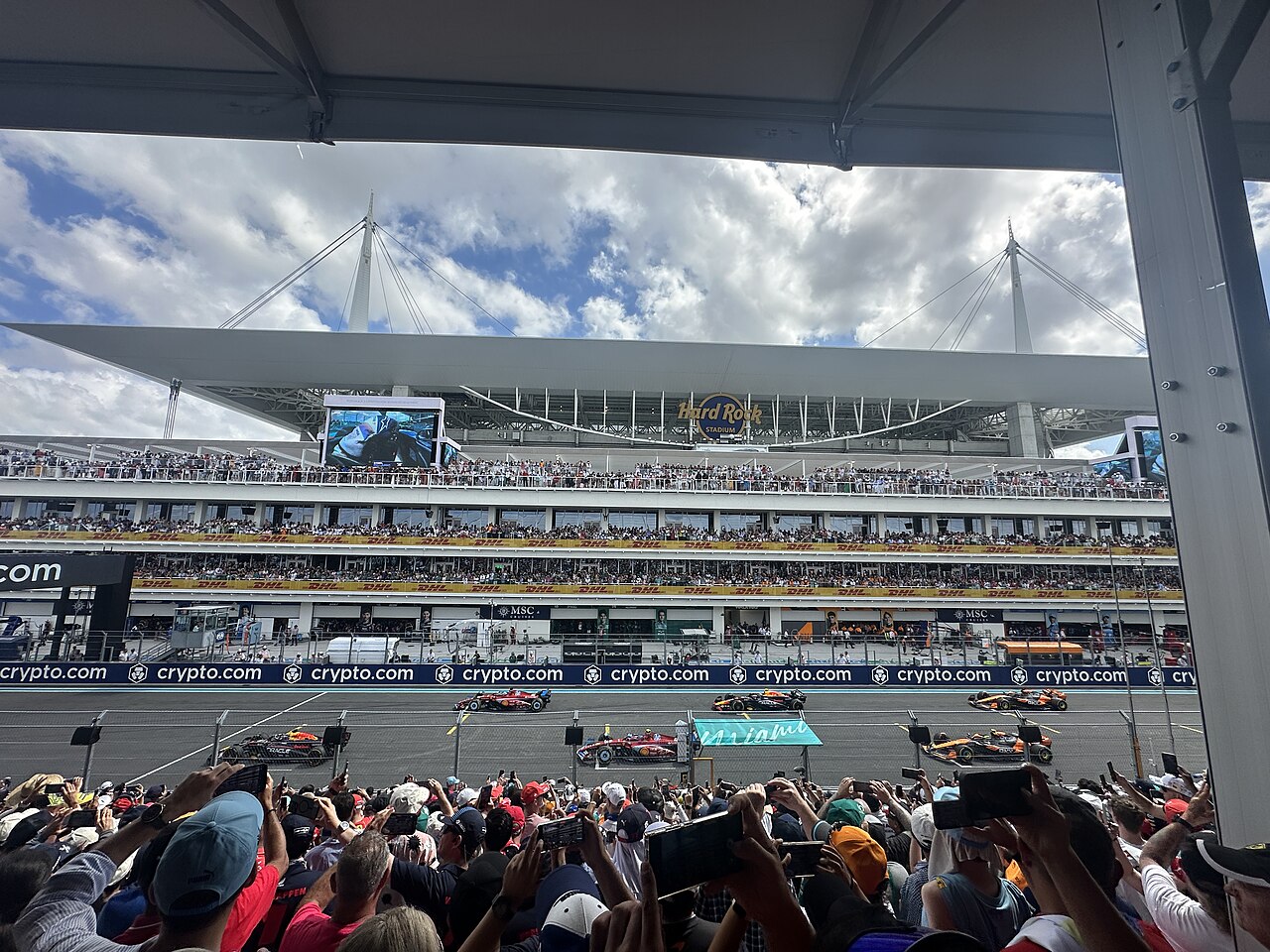
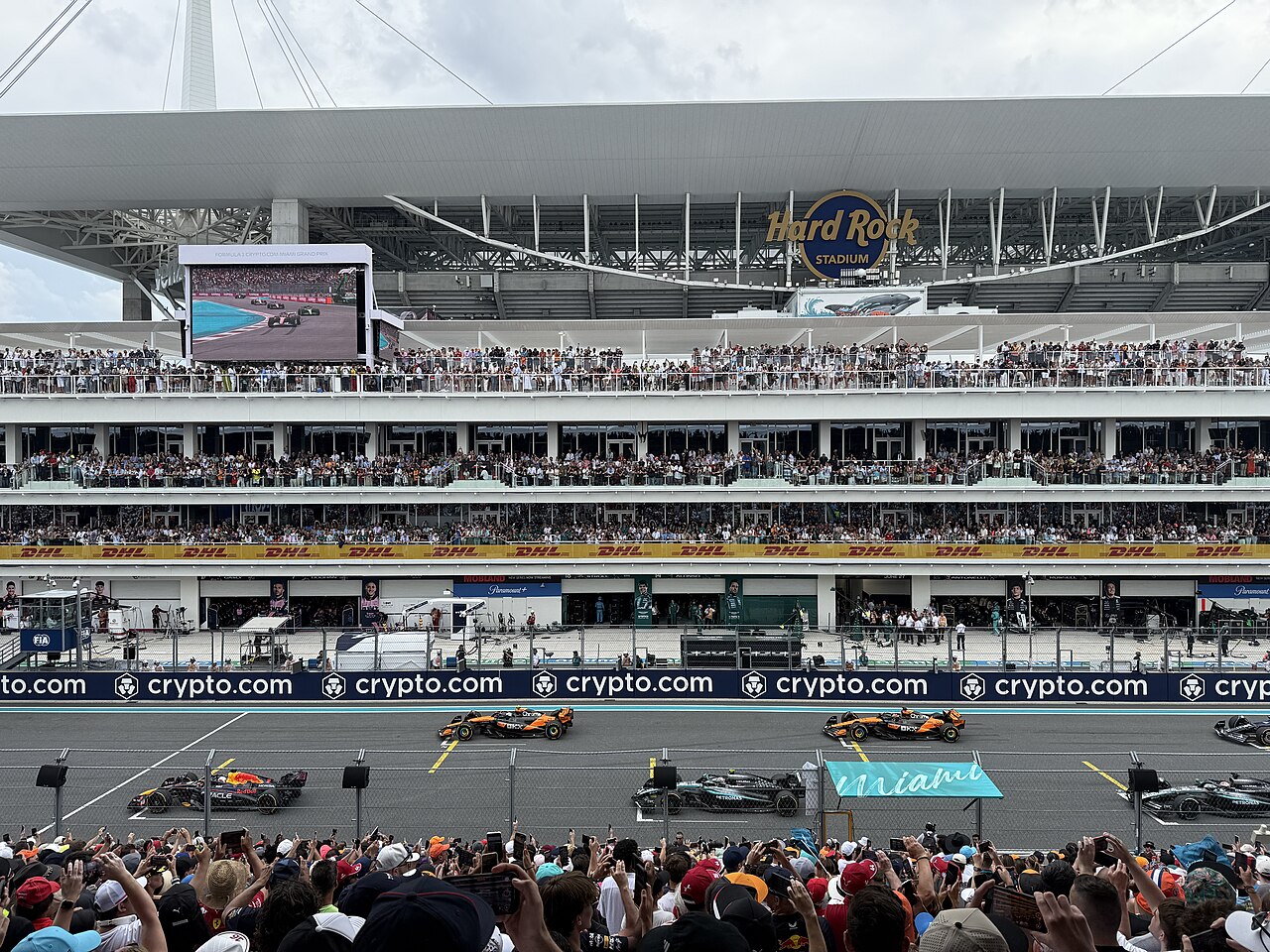
Lights out, and Turn 1 immediately delivered. Pole man Antonelli, P2 Verstappen, and P3 Leclerc all hit the brakes simultaneously. Antonelli and Verstappen both locked up; Verstappen lost the inside line and spun in the next corner. Antonelli ran wide but kept P1, while Leclerc dove inside and briefly took the lead.
Two separate incidents followed almost immediately. Isack Hadjar (Racing Bulls) and Pierre Gasly (Alpine) crashed in different sectors and got out of their cars. The FIA deployed the Safety Car. An early SC always shakes pit strategies — and in this case, it dictated the Leclerc → Antonelli → Norris pit-stop order that would define the race.
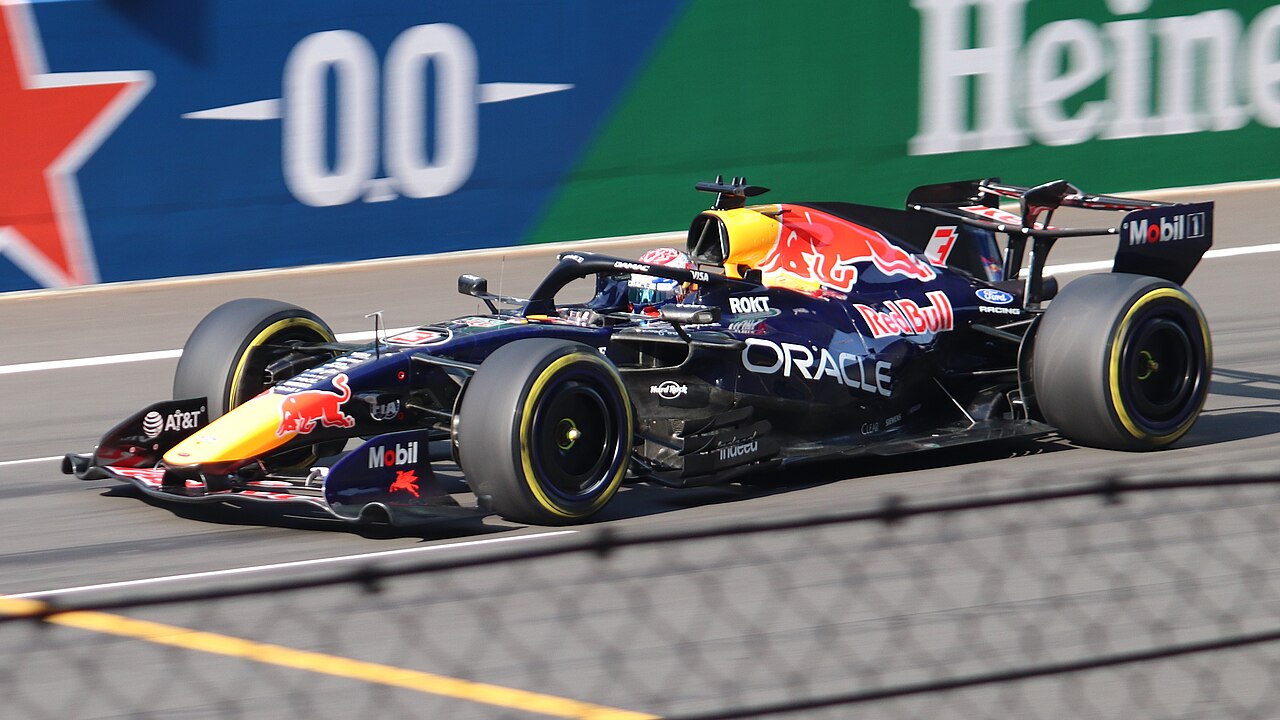
Verstappen dropped to P15 after the spin and clawed his way back, taking Leclerc on the very last lap to finish P5. The catch: cameras caught his car nudging the white line on the way out of the pits, and the FIA opened a post-race investigation. If a 5-second penalty is applied, P5 becomes P6 or P7. Decision is pending.
The Mercedes undercut — Sunday’s defining call
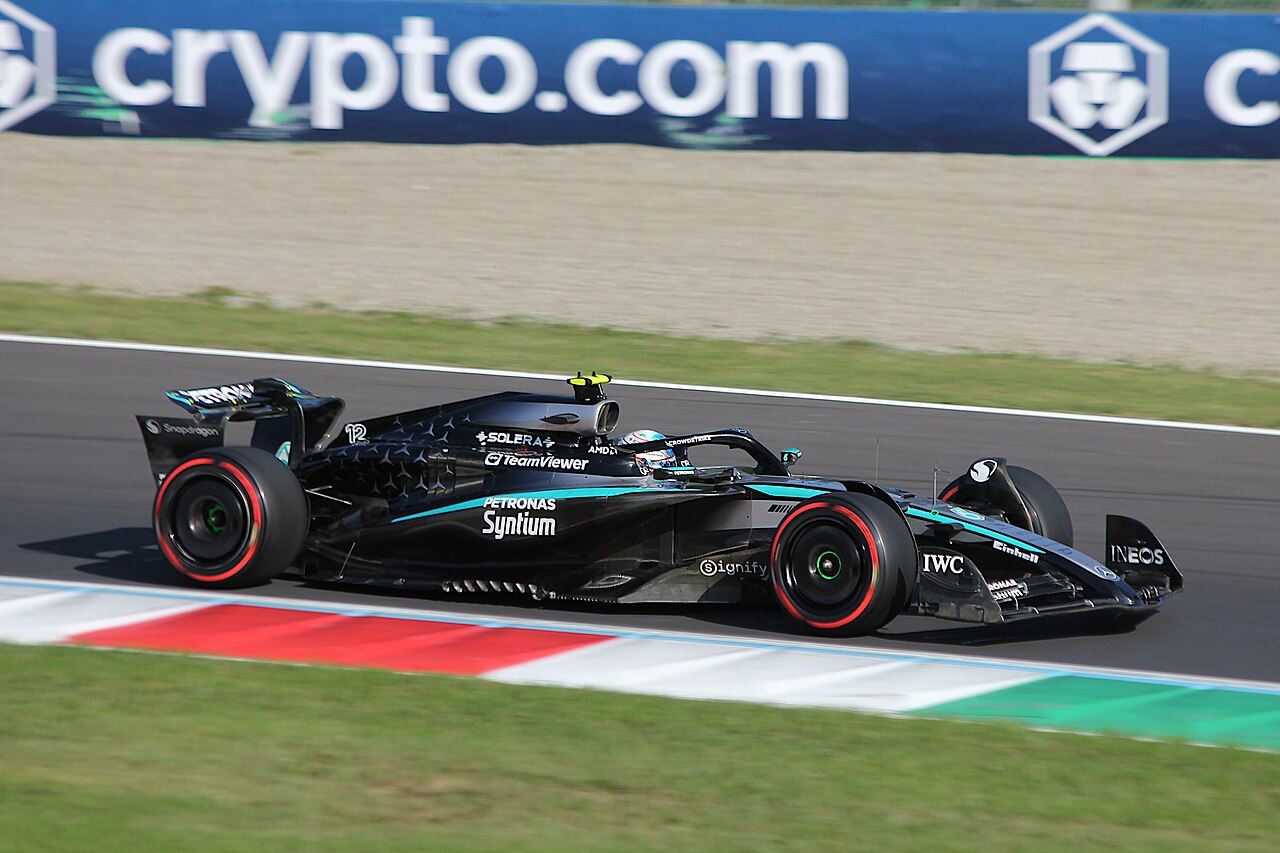
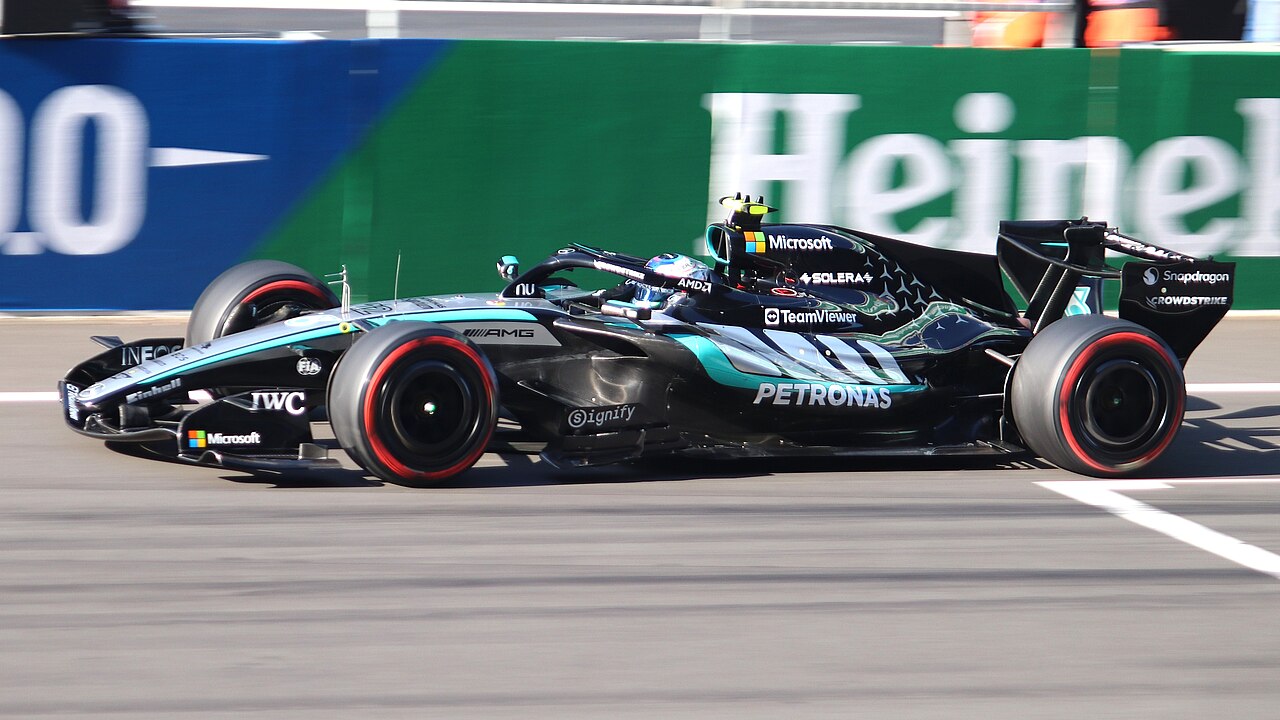
When the SC ended and the field returned to medium-compound full pace, Leclerc briefly held P1 with Norris in P2 and Antonelli in P3. That’s where Mercedes made the call that won them the race. The moment the pit window opened, Antonelli was the first car called in. Medium-to-medium swap, instant push lap. One lap later when Norris pitted, Antonelli was already ahead on track, fresh tyres up to temperature. Textbook undercut.
From P1 onwards, Antonelli managed pace. But the final 15 laps got messy on the radio. “Gearbox temperature rising.” “Paddle response slightly delayed.” “Throttle mapping needs check.” All within minutes of each other. Mercedes engineering pushed two separate fuel-mode and energy-deployment changes through the radio, and Norris closed the gap to within a second.
The last five laps reopened the gap. Antonelli crossed the line 3.264s ahead. A 19-year-old simultaneously managing car warning signals, radio instructions, and energy-deployment maps in the closing stint — that’s the same driver who picked up four track-limits violations on Saturday. The Sunday version was unrecognizable.
McLaren double podium — Piastri’s last two laps
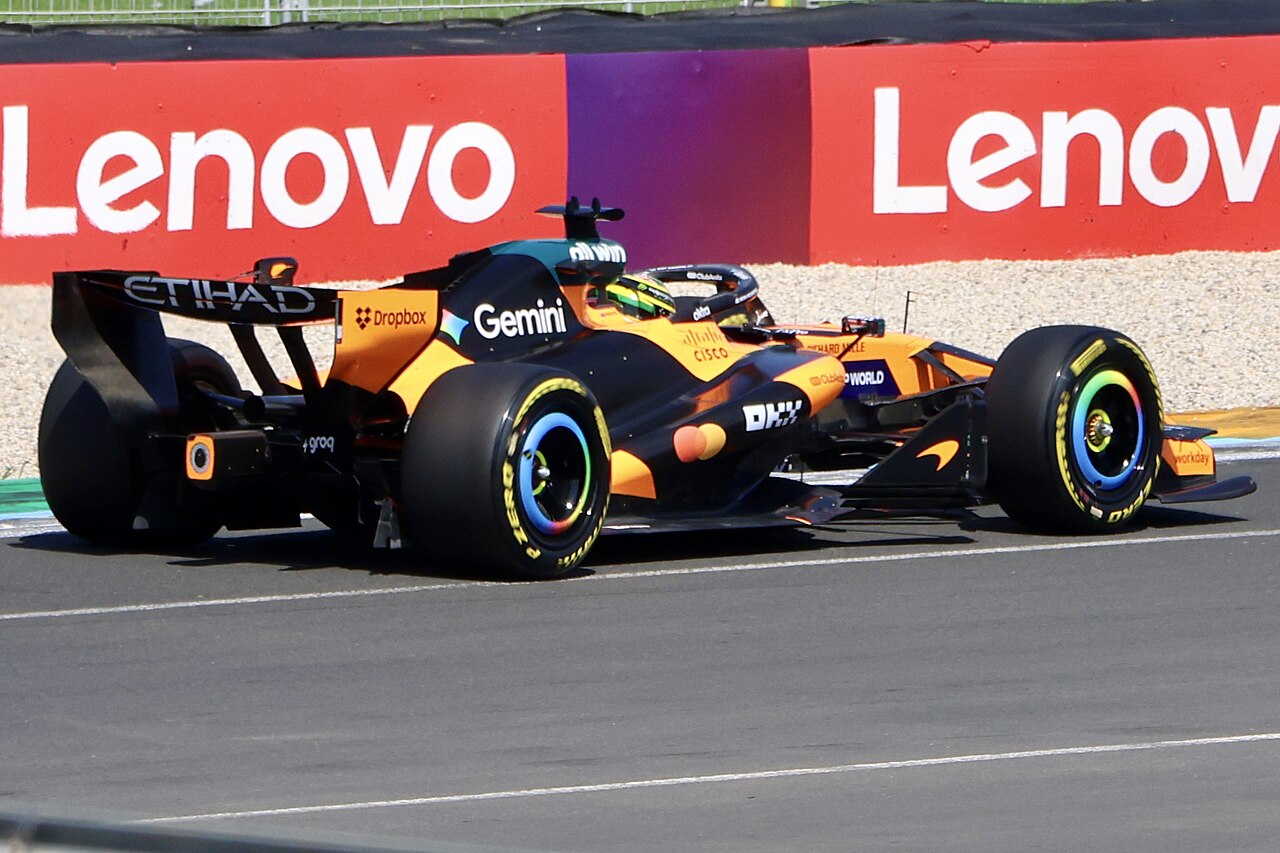
From P4 on the grid, Norris had pace from his first stint. He cleared Leclerc late in the medium stint and chased Antonelli the rest of the way. P2 finish, +3.264s. Without the Mercedes undercut, this race was probably his. His own radio caught it: “We should’ve pitted one lap earlier.” Sunday was McLaren’s closest run at a 2026 win so far.
And Piastri. From P7 on the grid, he ran an extended one-stop strategy and finished the race on fresher mediums. With two laps to go, Leclerc’s tyres had given up; Piastri took the inside line into the Turn 17 hairpin, and the move was clean. First podium of his 2026 season, and one of the most decisive overtakes of the year.
McLaren P2 + P3 = double podium and a major constructors haul. The first time this season they’ve put both Mercedes and Ferrari behind them at the same race. The win, though, slipped to the next round (Imola or Monaco).
Leclerc P3 → P6 — Ferrari’s frustrating Sunday
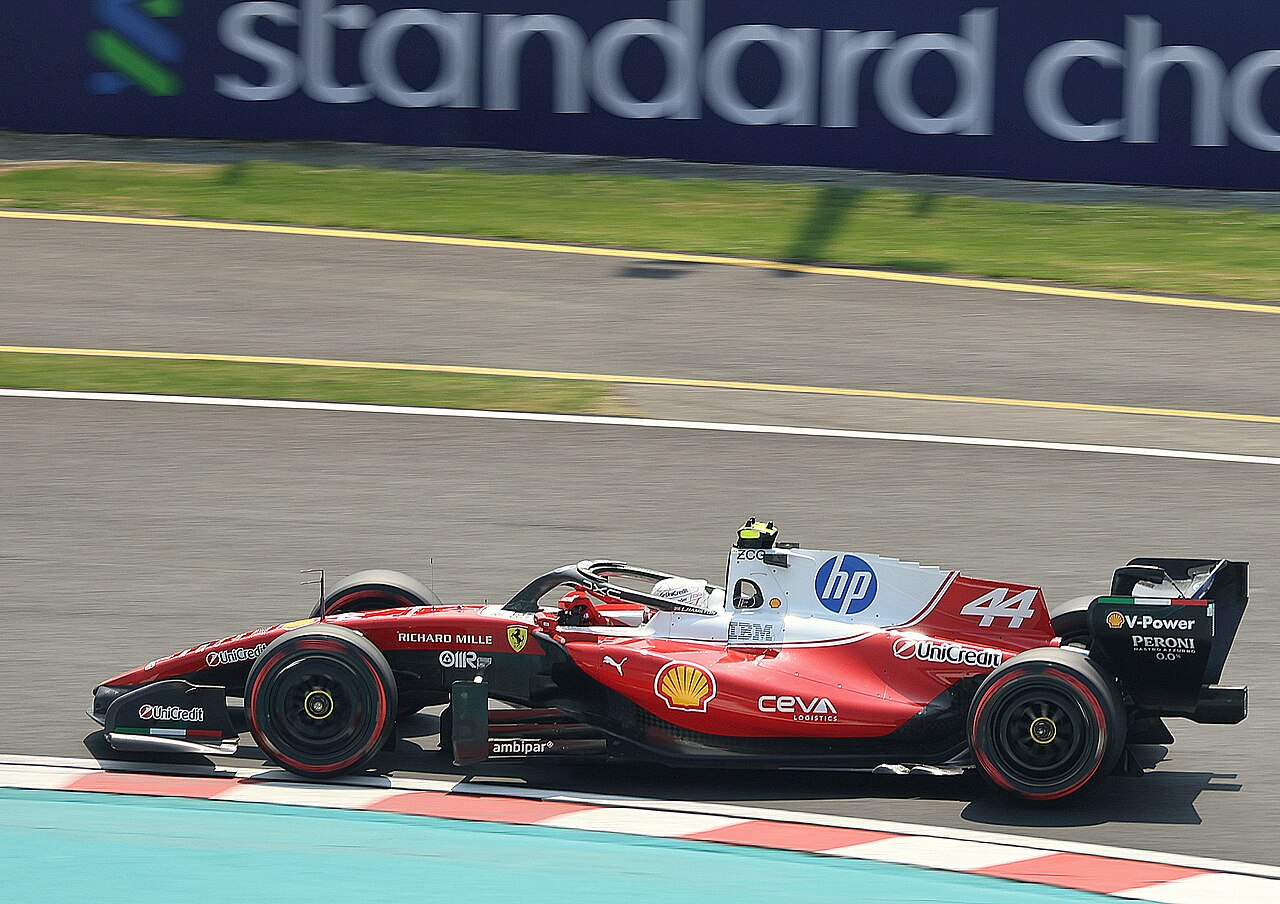
The Leclerc who briefly led at Turn 1 wasn’t the Leclerc who finished. Ferrari stretched the medium stint too long on a one-stop, and the final 10 laps saw degradation accelerate dramatically. Piastri took him with two to go; Verstappen took him on the last lap. P3 became P6 in three corners.
Ferrari benefitted from the new floor package all weekend, but Sunday’s race pace and tyre management still trail Mercedes and McLaren by a meaningful margin. Hamilton finished P7. The “first real Ferrari counter-punch of 2026” narrative deflated quickly under the Florida sun.
Midfield breakdown — Williams double points, Alpine and Aston Martin in trouble
Sunday’s midfield and back markers told their own clear story. The split between Mercedes-PU customers and the rest, plus the strategic shake-up from the early Safety Car, defined the order. Team by team:
Williams: Alex Albon P9, Carlos Sainz P10. Their third double-points finish of 2026. Mercedes PU plus a more stable chassis is increasingly cementing them as midfield leaders. Sainz’s move from Ferrari to Williams looks like the right call again.
Alpine: Pierre Gasly DNF after the early-laps crash. Franco Colapinto P12. Alpine still has too many balance-imbalance rounds. They share Williams’s PU but aren’t extracting the same performance. Imola needs a fresh setup direction.
Aston Martin: Fernando Alonso P11, Lance Stroll P14. Alonso missed the points by one position. The AMR26 has been straight-line-limited all season, and Miami’s long straights make that worse. They badly need their next aero package.
Racing Bulls: Isack Hadjar DNF (the Turn 1 crash that triggered the SC), Liam Lawson P13. Combined with Saturday’s SQ disqualification, this was Racing Bulls’s worst weekend of the season. Underlying car pace has actually improved — Sunday’s luck simply did not cooperate.
Audi (formerly Sauber): Nico Hülkenberg P15, Gabriel Bortoleto P17. Audi’s PU is currently rated at the back of the field, and a veteran like Hülkenberg can only get them so close to points. The team’s stated genuine target year remains 2027.
Haas: Oliver Bearman P16, Esteban Ocon P18. Haas also lacks raw pace this season. Bearman is being tipped as a rookie-of-the-year candidate, but the car isn’t supporting it. Points-zone runs will be a stretch for the rest of 2026.
Overall the midfield is settling into three tiers: Mercedes-PU customers (Williams) on top, then the Ferrari/Honda customers, and Audi and Haas at the back. Imola is the next chance for that order to break.
Final results — top 10
- Kimi Antonelli (Mercedes) — third win of 2026
- Lando Norris (McLaren) — +3.264s
- Oscar Piastri (McLaren) — first podium of 2026
- George Russell (Mercedes)
- Max Verstappen (Red Bull) — recovered from Turn 1 spin, FIA investigation pending
- Charles Leclerc (Ferrari) — late P3 → P6 fade
- Lewis Hamilton (Ferrari)
- (midfield positions)
Five moments that decided the race
Across 57 laps, five moments shaped the result:
- Turn 1 lockup (lap 1): Antonelli and Verstappen both locked up. Verstappen lost the inside line and spun next corner, dropping P2 to P15.
- Safety Car (laps 4-5): Hadjar and Gasly crashes in separate sectors. The SC influenced pit-stop order. Leclerc went P3 → P2 → briefly P1.
- Mercedes undercut (lap 22): Antonelli pitted medium-to-medium first. Norris pitted one lap later and emerged behind. Race-defining call.
- Antonelli radio crisis (laps 42-50): Gearbox temp, paddle delay, throttle mapping concerns all simultaneously. Two fuel-mode changes pushed via radio.
- Piastri vs Leclerc (lap 56): Fresh-medium Piastri caught dying-tyre Leclerc. Inside line into Turn 17, clean overtake.
Change any of these five and the race outcome changes. Without the Mercedes undercut, Norris likely wins. Without the Verstappen spin, P2 was probably Verstappen’s instead of Norris’s.
Team-by-team Sunday breakdown
Mercedes: P1 + P4. 33 constructor points. Cleanest pit calls + radio + car-issue management of the season. Antonelli’s pace plus Russell’s solid P4 = championship lead extended to +21 points. Mercedes leads the narrative into Imola.
McLaren: P2 + P3. 33 constructor points (tied with Mercedes for the day). First double podium of 2026. The win slips again. Norris’s “should’ve pitted one lap earlier” radio is the lingering regret. To beat Mercedes at Imola, the pit-call timing has to be sharper.
Ferrari: P6 + P7. 14 constructor points. Saturday’s optimism (Leclerc P3, new floor working) collapsed under Sunday’s tyre degradation. Leclerc’s one-stop stretch was too aggressive; Hamilton’s pace was simply lacking. Ferrari needs another genuine step in the car.
Red Bull: P5 (or P6 if penalty). Verstappen alone. Turn 1 spin → pit lane white-line scrutiny → final-lap overtake on Leclerc. The most dramatic driver of the day. Saturday’s qualifying P2 didn’t translate into Sunday race pace. The Imola upgrade has to actually deliver.
Will Verstappen actually get a penalty?
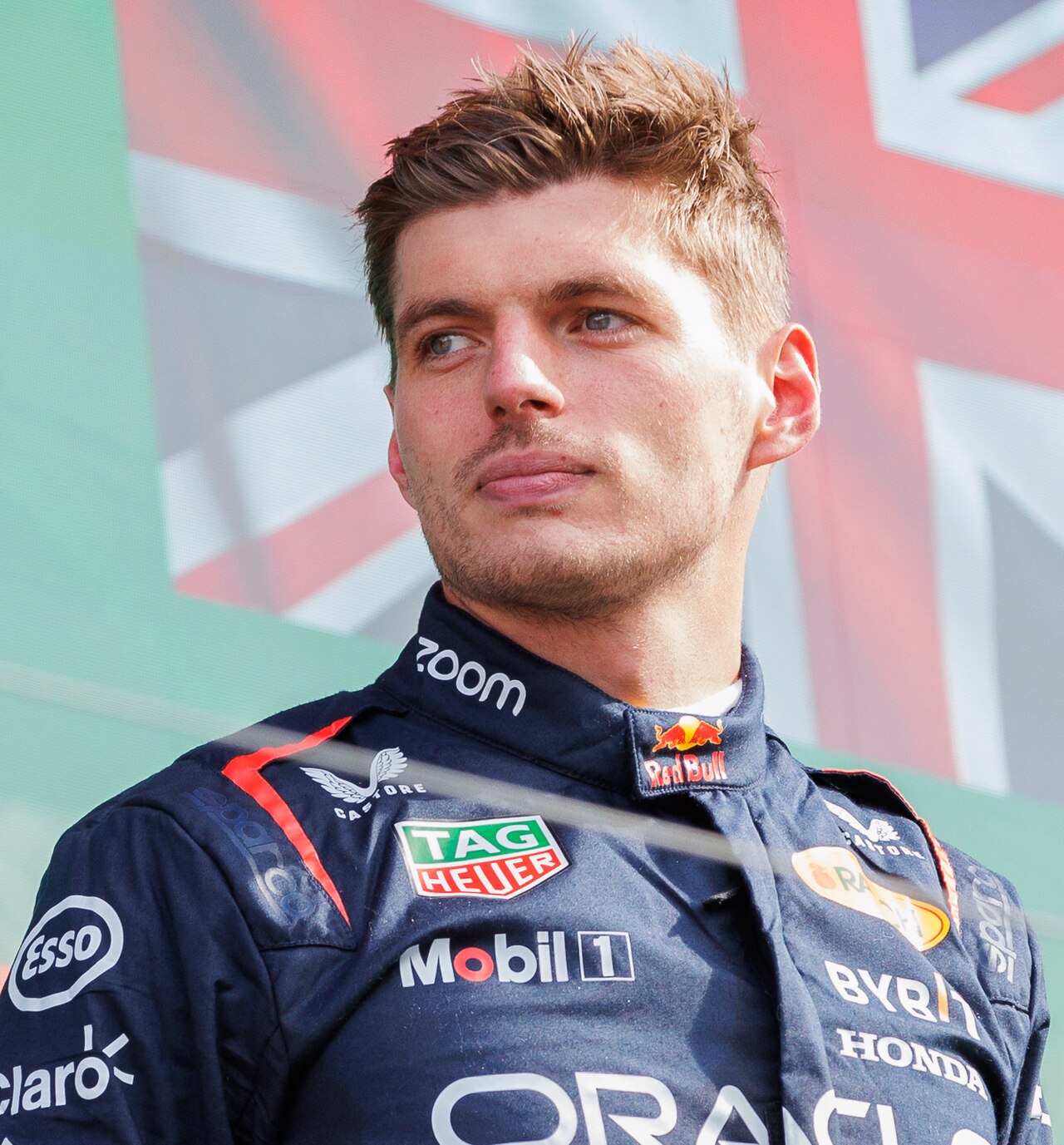
Quick FAQ: pit-lane white-line crossings typically draw a 5-second penalty. The question is whether the breach was clear. Camera angles caught Verstappen’s left front nudging the line on pit exit, but some reads suggest he was on the line, not over it.
Update: FIA stewards applied a 5-second penalty to Verstappen for crossing the pit-exit white line (front-left tyre outside the solid line, breach of ISC Appendix L Ch.IV Art.6c). However, in the same set of post-race rulings, Leclerc was given a separate 20-second penalty, which dropped Leclerc further behind Verstappen. Net result: Verstappen retains P5. Verstappen took the penalty but lost no track position. (Sources: Formula1.com, PlanetF1)
Championship impact — the gap reopens
Before Miami, Antonelli’s championship lead was +9 points; after the Sprint penalty it shrank to +7. Sunday reset it dramatically. Antonelli +25 (win), Russell +12 (P4). Combined with Sprint scoring (Antonelli +3, Russell +4):
- Antonelli: Sprint 3 + race 25 = +28 points
- Russell: Sprint 4 + race 12 = +16 points
- Weekend net Antonelli – Russell = +12 points. Pre-weekend +9 + 12 = +21 points championship gap.
Saturday looked like the season was wobbling. Sunday answered cleanly. Approximate championship table at round 5:
- Antonelli ~100 pts — championship leader, +21 gap
- Russell ~79 pts
- Norris ~60 pts — boosted by Miami P2 and Sprint win
- Leclerc ~55 pts
- Piastri ~50 pts
(Exact totals will follow once the FIA publishes official points.)
Was Miami the season’s turning point?
Through Saturday the answer looked like yes. Norris took Sprint pole and the Sprint win. McLaren ran 1-2. Verstappen jumped to qualifying P2. Ferrari claimed P3. Mercedes’s untouchable status was visibly cracking.
Sunday clarified the picture. Saturday’s narrative shift was real, but Mercedes still has the answer on race day. Antonelli plus W17 absolute pace remains the grid-leading combination — the rest of the field has merely closed the gap from a half-second to two- or three-tenths. That’s a lot in F1, but it isn’t a fundamental order change. The next 0.2 seconds may compress further as the season progresses.
The next round is Imola. Mercedes, McLaren, Ferrari, and Red Bull are all bringing upgrade packages. Miami wasn’t the season’s first true turning point — but it set up the stage for the second one cleanly.
Driver of the day — three candidates
Three drivers have legitimate cases for performance of the day, each for different reasons:
Kimi Antonelli: pole-to-win, third 2026 victory, historic first-three-poles-to-wins record, recovery from a Saturday penalty, and managing escalating radio warnings in the final 15 laps. Pure championship-leader performance. The headline answer.
Oscar Piastri: started P7, finished P3 with a clinical late-race overtake on Leclerc into Turn 17. The strategy execution and the patience to wait for Leclerc’s tyres to die before attacking are both standout. First 2026 podium and arguably the most rewarding individual drive of the day.
Max Verstappen: spun in lap one, dropped to P15, drove through the field, took Leclerc on the very last lap. Pure salvage drive. The kind of result that gets called “Verstappen-esque” because no one else routinely produces it. The pit-lane white-line scrutiny is the only thing potentially undermining it.
Most fan-vote outlets are leaning Antonelli for the headline win. The Piastri overtake is the most visually memorable. The Verstappen recovery is the most narratively dramatic. Pick your flavor.
What this race tells us about 2026 active aero
Across 57 laps, on a track designed for high-speed straights and tight corners, the 2026 active aero plus Overtake Mode system delivered exactly what the regulations targeted — but in a different shape than DRS would have. A few observations:
First, the headline overtake count was higher than 2025’s Miami GP at the equivalent race distance. Active aero opening on every straight let trailing cars pull alongside earlier than DRS allowed. Second, the overtakes themselves were less automatic. Drivers had to time Overtake Mode deployment carefully — burn it too early and the car ahead simply matched the speed; deploy it too late and the corner arrived before the pass completed. Piastri’s Turn 17 move on Leclerc was a textbook example of perfect timing.
Third, energy management mattered more than raw pace in the closing laps. The cars that had electrical reserve in the final five laps were the ones that controlled their position. Antonelli’s last-stint engineering communication was largely about maximizing deployable energy while protecting the gearbox. The driver who finishes a race with 0.5MJ in reserve is now structurally favored over the driver who used everything by lap 50.
And finally, the new rules made midfield racing genuinely watchable for once. Albon’s recovery from a midfield slot to P9, Sainz’s late-stint pace into P10, and the multiple position changes in the P11-P15 range all came from active aero plus Overtake Mode interactions that simply wouldn’t have happened under DRS. That’s the part of the regulation set that the FIA is probably most pleased about.
What to watch for Imola
About two weeks until the Emilia Romagna Grand Prix. The signal items between now and then:
- Verstappen FIA verdict: 5-second penalty would re-rank the top six. Either way, Red Bull’s confidence narrative for Imola is built on whether Sunday’s recovery felt like a baseline or a one-off.
- Mercedes gearbox investigation: Antonelli’s gearbox concerns will require teardown analysis. If the part needs replacement under the limit, grid penalties could surface in two or three rounds.
- McLaren pit-call timing: Norris’s “one lap earlier” radio is the single technical lesson Imola has to embed. If McLaren responds, they’re a genuine win threat.
- Ferrari race-pace fix: Saturday qualifying pace plus Sunday tyre-management collapse is the pattern Ferrari has to break. Imola is a Ferrari home race — the pressure will be loud.
- Imola upgrade packages: All four front teams are reportedly bringing significant aero updates. The order could shift again.
Two weeks gives Mercedes time to consolidate, and gives the chasers time to react. The 0.2-second gap that Saturday revealed could compress further by Imola Sunday. That’s the kind of margin where individual driver execution starts mattering more than car pace alone — exactly the territory Antonelli has just shown he can handle.
Closing — the 19-year-old drove like a champion
Antonelli is the same driver who picked up four track-limits violations and a “silly mistake” Sky-commentary verdict less than 24 hours earlier. Within a single day he turned that into pole, win, third championship victory, and a +21 championship lead. The most impressive part wasn’t even the pace — it was managing escalating radio warnings while still controlling pace in the closing 15 laps.
Toto Wolff said in the post-race interview: “The gearbox made it to the end, but the last five laps were genuinely dangerous.” Had the car actually broken, the championship swing could have happened in a single round. Instead, Antonelli sensed the risk, throttled back marginally, and saved the car. That’s a 19-year-old showing the kind of judgment most rookies take three seasons to develop.
One more note: Miami had its early SC, but no rain materialized. The FIA’s call to move the start from 16:00 to 13:00 produced a clean dry race. Had they kept the original time, thunder around 17:00 was a near-certainty. That decision will probably be remembered as one of the season’s best calls — a wet chaos race could have flipped the championship math entirely.
About two weeks until Imola. In the meantime, expect the Verstappen FIA decision, fresh team data, and upgrade rumors. Miami delivered two different stories across two days. That’s why F1 is what it is.