
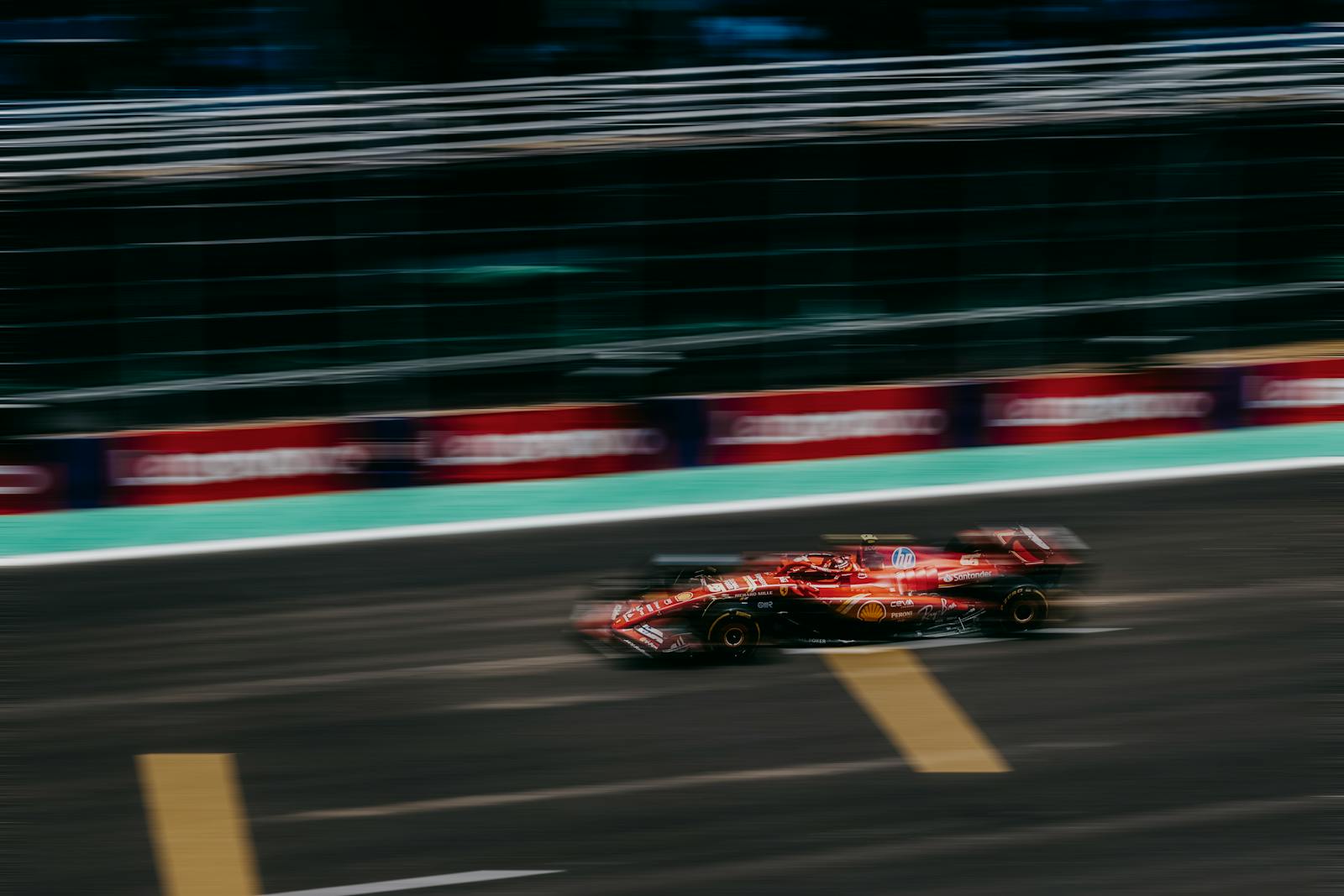
Miami’s Saturday is in the books, and the season’s narrative just changed. In the Sprint, Lando Norris took his first win of 2026 — and McLaren delivered a 1-2 with Oscar Piastri behind him. It’s the first non-Mercedes victory of the year. Hours later, Main Qualifying flipped the picture again: Kimi Antonelli claimed pole, but Norris’s Sprint pole becoming a Q P4 finish casts a long shadow over the day.
And then Sunday’s race got moved up three hours. Florida is bracing for thunderstorms. Let’s go through it section by section.
Sprint Race — McLaren 1-2, the season’s first non-Mercedes win
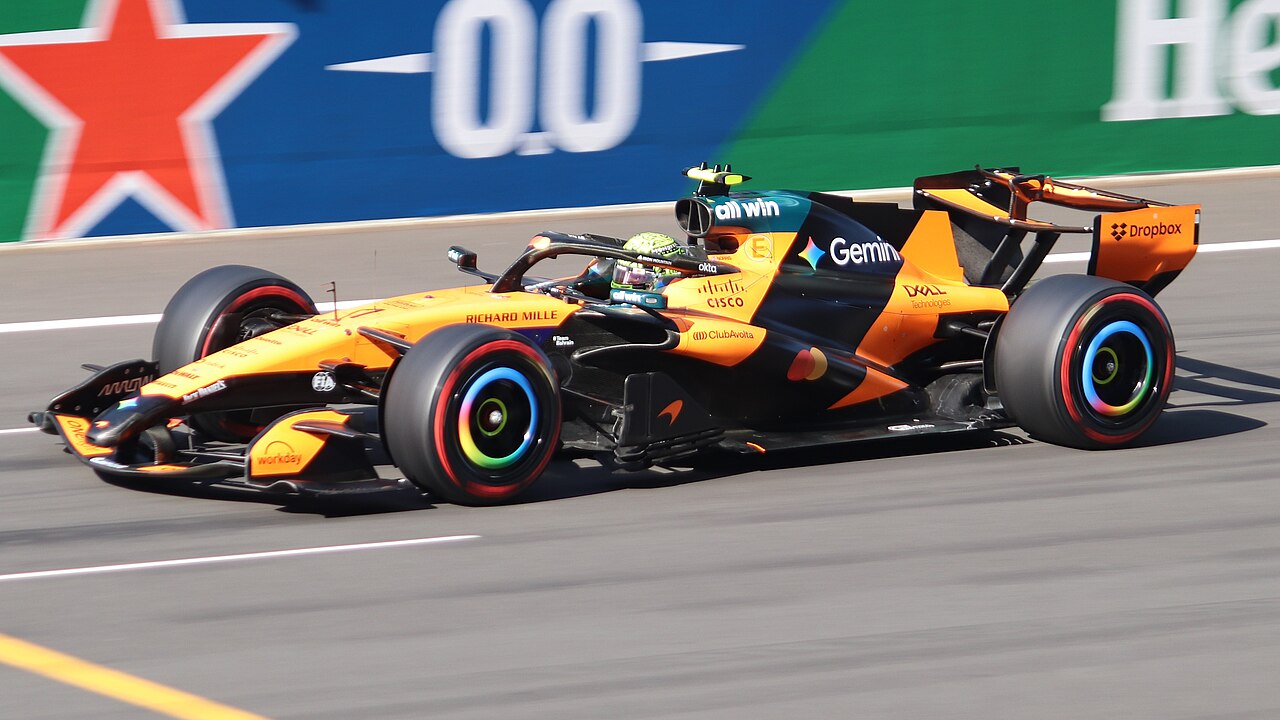
The start was decisive. Norris converted his pole into a clean Turn 1 lead, and from there it was pace control: 19 laps of slowly but steadily walking away from Piastri and Leclerc. This wasn’t just a Sprint win. It was the first time in the 2026 season a non-Mercedes team has crossed the line first. Mercedes had taken Australia, China, Japan, and the Shanghai Sprint before this. The crack has finally appeared.
Piastri’s P2 isn’t a small detail either. It’s the first time since the Australian Grand Prix that he’s been on Norris’s pace. McLaren brought a new floor and sidepod package to Miami, and that package has, for the first time this season, given them the legs to match Mercedes both on the straights and through the corners. Leclerc’s P3 confirmed Ferrari’s new floor is working too.
Final Sprint top six:
- Lando Norris (McLaren) — first win of 2026
- Oscar Piastri (McLaren) — McLaren 1-2
- Charles Leclerc (Ferrari)
- George Russell (Mercedes)
- Max Verstappen (Red Bull)
- Kimi Antonelli (Mercedes) — P4 on the road, dropped to P6 by a 5-second track-limits penalty
Antonelli’s track-limits penalty — the championship gap is shrinking
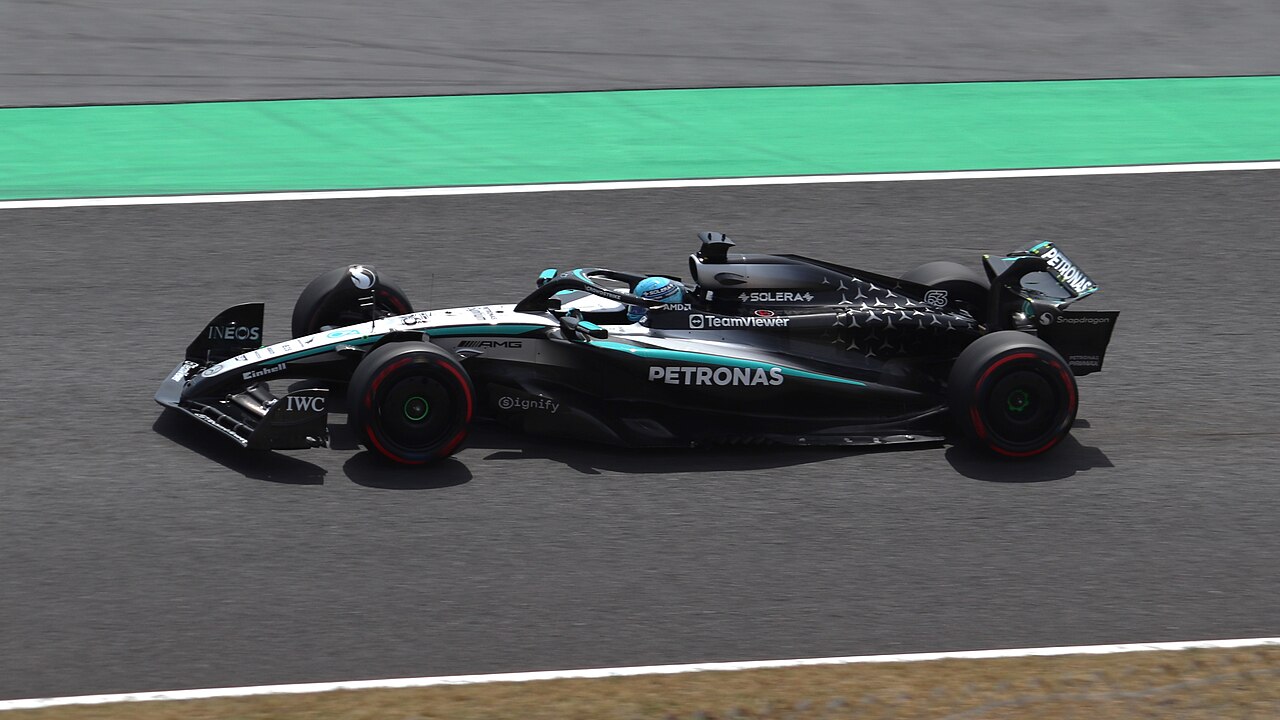
Antonelli crossed the line in P4 but dropped to P6 after a 5-second penalty. Across 19 laps, he picked up four separate track-limits violations. He was already on the black-and-white flag (final warning) by lap 12, and his fourth violation came on the final lap — triggering the automatic 5-second sanction the FIA rulebook calls for after a fourth offense.
Jenson Button on Sky’s commentary called it bluntly: a “silly mistake.” There was no real reason to push the white line on the final lap with the black-and-white flag already shown. It’s a 19-year-old’s instinct — keep pushing — that a more experienced driver would have throttled back.
The championship math changed. Antonelli arrived in Miami with a nine-point lead over teammate George Russell. P4 in the Sprint would have been five points; P6 brought just three. Combine that with Russell taking four points for P4 and the gap has narrowed from 9 points to 7 points. Sunday’s main race could plausibly flip the championship lead inside a single round.
Main Qualifying — Antonelli’s instant response, Verstappen’s P2
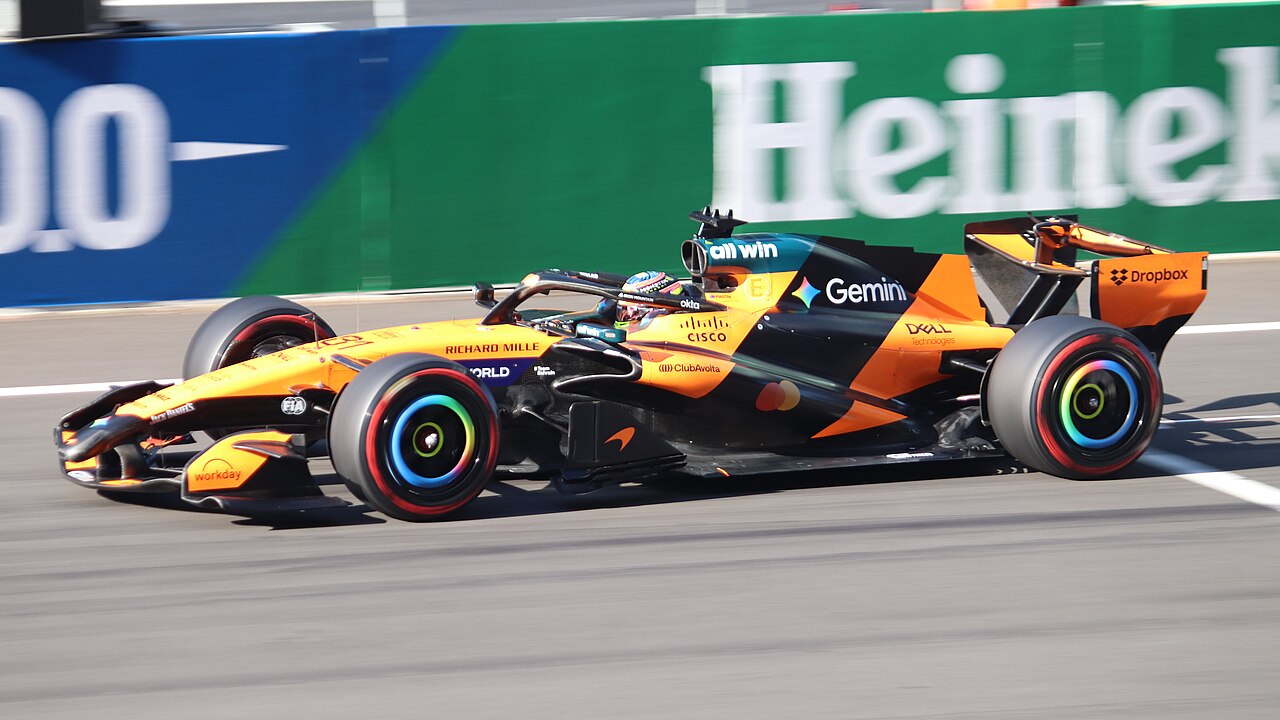
If you’d watched the Sprint, you’d have called Norris for pole. Antonelli answered immediately. 1m 27.798s for pole position, erasing the penalty in a single session. That’s the kind of recovery that explains why this 19-year-old leads the championship.
Second place went to Max Verstappen, just over a tenth back. P5 in the Sprint, P2 in qualifying — that’s the biggest single-day swing of the weekend. He told media it was an “incredible turnaround,” and Red Bull made significant setup changes between sessions. The RB22 hasn’t been a pole-pace car all season. Saturday afternoon was the first time it got close.
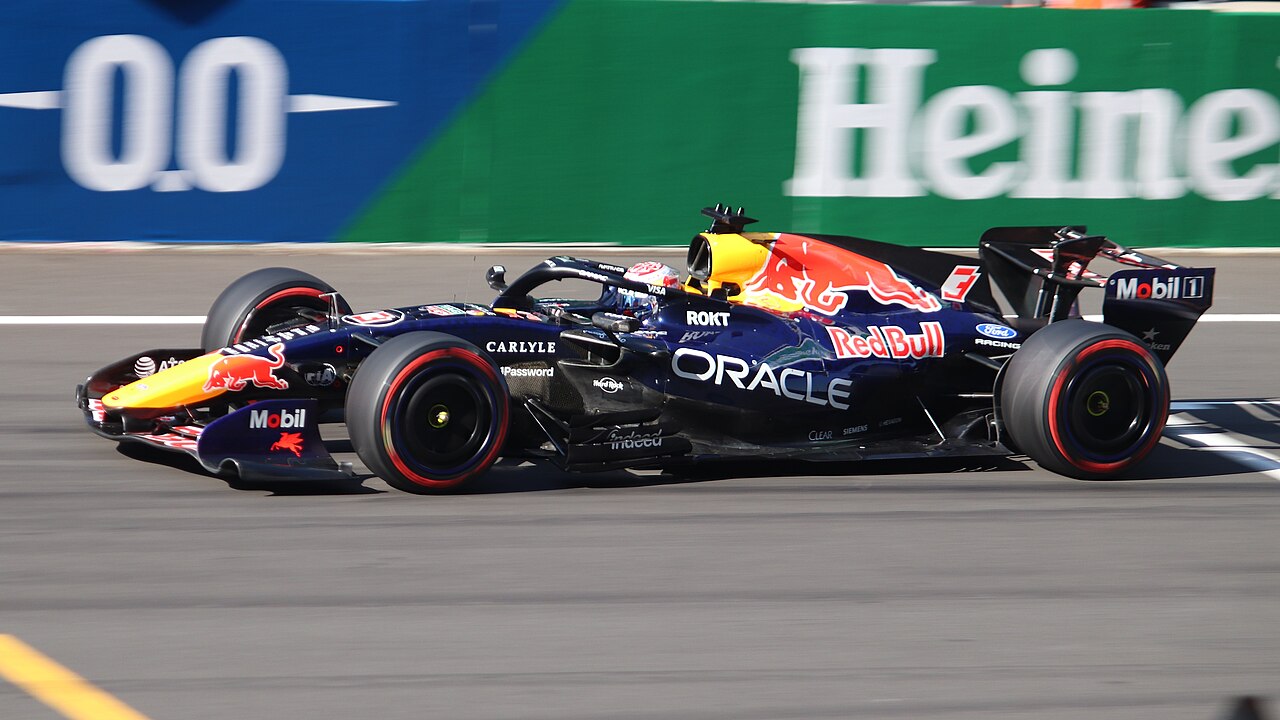
Final grid top 10:
- Kimi Antonelli (Mercedes) — 1:27.798
- Max Verstappen (Red Bull)
- Charles Leclerc (Ferrari)
- Lando Norris (McLaren) — recovered from a Q2 boost issue
- George Russell (Mercedes)
- Lewis Hamilton (Ferrari)
- Oscar Piastri (McLaren)
- (midfield positions follow)
Piastri dropping to P7 was the surprise on the McLaren side. He’d been level with Norris in the Sprint, but couldn’t replicate that pace in qualifying. McLaren’s setup didn’t lock in equally for both drivers, and starting 4-7 instead of 1-2 makes Sunday’s race strategy materially harder — they can really only optimize for one of the two cars.
Upgrade war — Miami was 2026’s first real development battle
Saturday wasn’t just a single race weekend. It was the round when the season’s first round of major upgrade packages arrived all at once. Who genuinely stepped up — and who didn’t — got mostly answered.
McLaren: New floor + sidepod package. Biggest gain of the weekend. Norris went from Sprint pole to Sprint win, with Piastri in P2 to back it up. The package gave them the legs in both straight-line efficiency and corner downforce — for the first time this season, McLaren genuinely had Mercedes covered in race trim. The Norris P4 vs Piastri P7 split in qualifying suggests the setup hasn’t fully landed across both cars yet, but the underlying car pace is real.
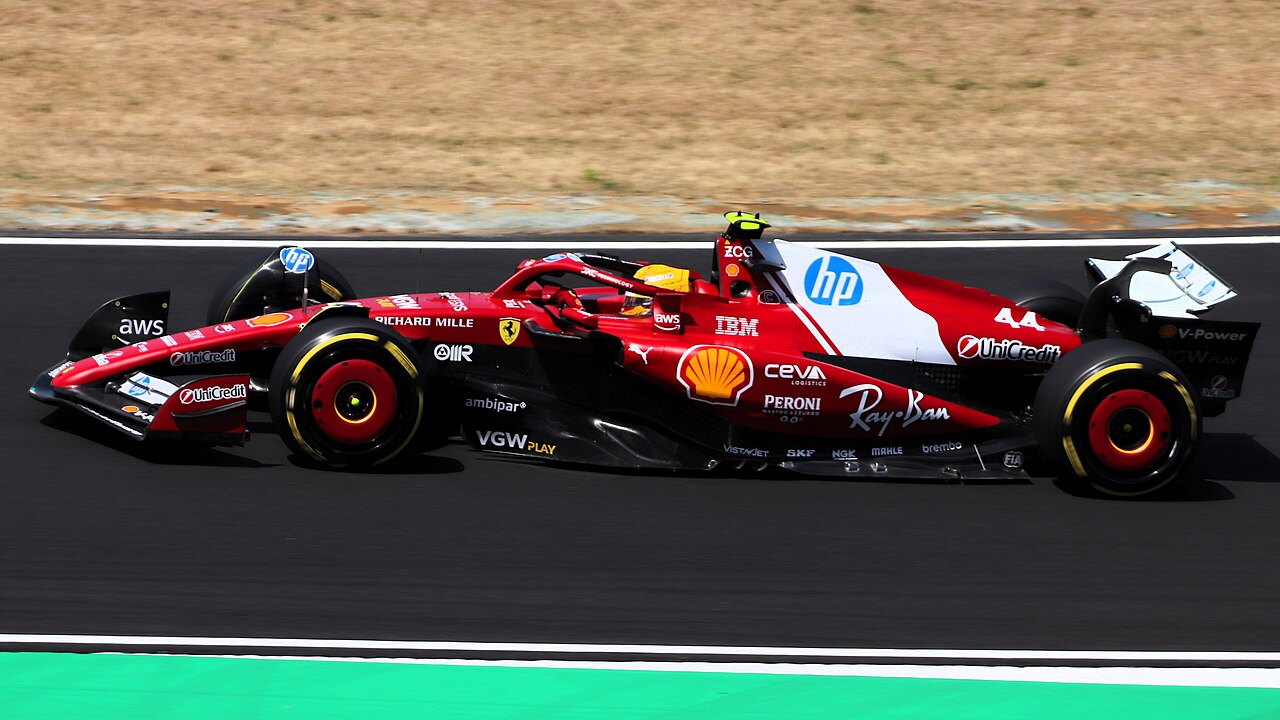
Ferrari: New floor. FP1 quickest, Sprint P3, Qualifying P3 — completely consistent. Leclerc’s wobble in SQ3 looked like a setup-window issue, not a car-pace issue, and Q1-3 confirmed it. Hamilton looked the most settled in the SF-26 he’s looked all season. A Ferrari 1-2 on Sunday would genuinely flip the championship narrative.
Red Bull: No major package — but a setup overhaul. Verstappen jumping to qualifying P2 was the biggest surprise of the day. His “incredible turnaround” line covers a setup change, an evolved driving style, and Saturday afternoon track conditions all coming together. The real upgrade package is reportedly arriving at Imola.
Mercedes: No major upgrade this round. That’s why the gap shrank as soon as rivals brought new parts — they didn’t actually go backwards, the rest just caught up. Pole and P5 (Russell) still proves the W17 is the absolute-pace car. The next Mercedes upgrade is expected at Imola or Monaco.
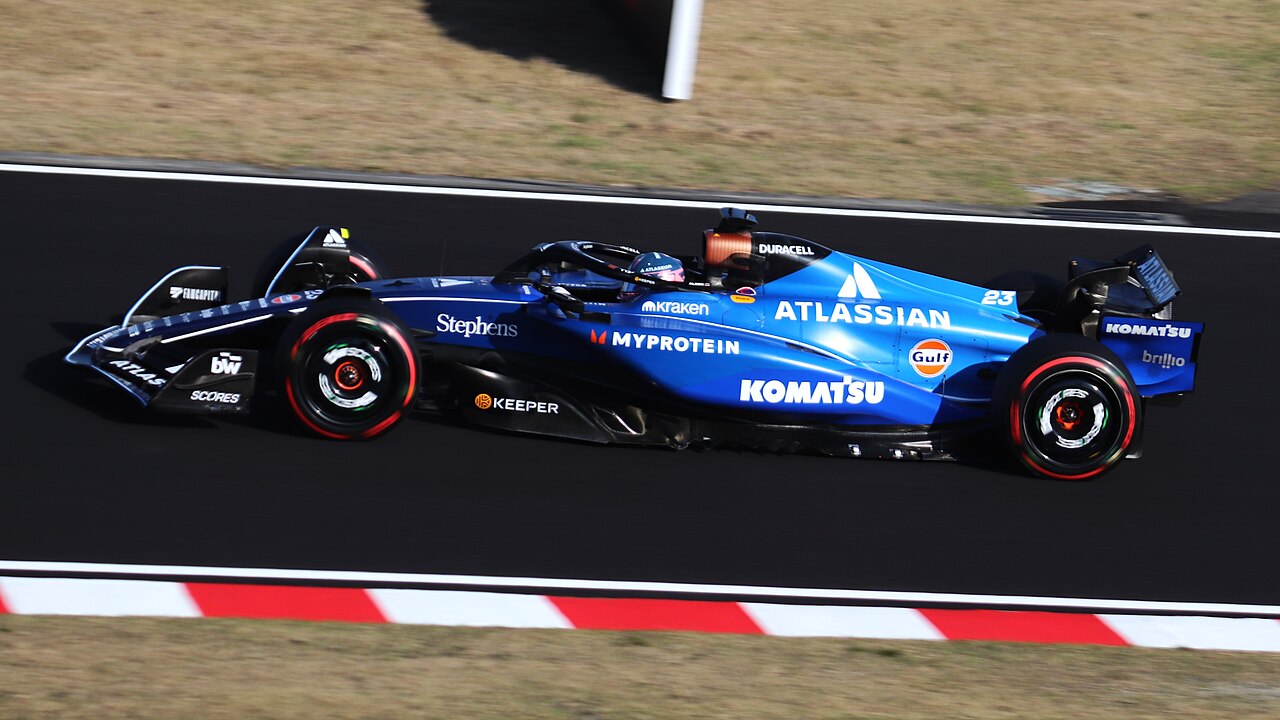
Midfield: Williams’s Alex Albon nudging into Q3 territory is meaningful. As a Mercedes-PU customer, Williams has been quietly stronger every weekend in 2026. Alpine and Aston Martin spent another weekend fighting concrete walls and largely missed the points zone in qualifying.
Norris’s Q2 boost issue — pole pace, P4 grid
Norris missing pole in main qualifying wasn’t a pace problem. It was a boost issue in Q2. McLaren CEO Zak Brown confirmed it directly on Sky. The 2026 car’s “boost” is the +0.5MJ electrical energy used in Overtake Mode and tied to qualifying-pace battery deployment — and in Q2 it didn’t work properly.
What’s impressive is how quickly McLaren patched it before Q3. Norris’s first push lap in Q3 was instantly the fastest in the session. He ended up P4 after Antonelli, Verstappen, and Leclerc all found final-run improvements he couldn’t match — but with a clean boost system, he’d have been in pole contention.
Norris himself called it a “reality check” for McLaren. The Sprint pole-to-win narrative had the team riding high; the boost issue brought them back down a notch. If that issue resurfaces on Sunday, P4 could become P6 or P7. If it stays clean, overtakes on Verstappen and Leclerc are absolutely possible.
Why did Antonelli pick up four track-limits violations?
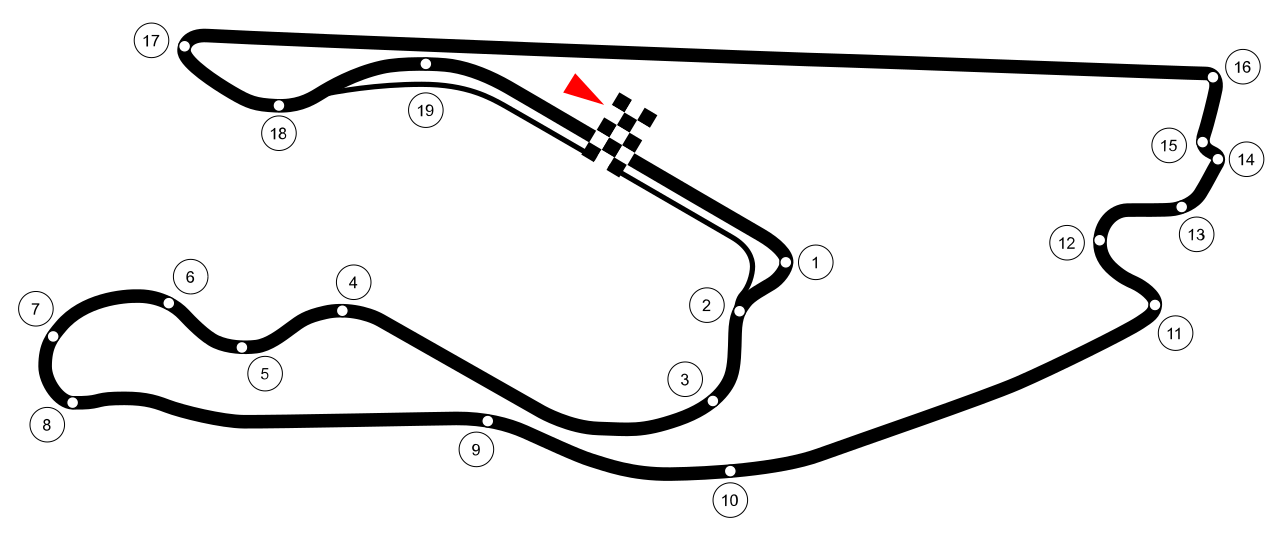
The Sprint penalty wasn’t a single mistake — it was a pattern. Miami’s Turn 17 and Turn 19 have exit kerbing that lets the car drift wide on a hard push lap, and the FIA had announced before the weekend that those two corners would be monitored more strictly than usual.
Antonelli still went over four times across 19 laps. By lap 12 he had the black-and-white flag — meaning he knew. The job from there was to back off two-tenths a lap and finish the race clean. Instead he kept pushing. That’s the 19-year-old’s “I can do one more” instinct. A driver like Verstappen would have throttled back the moment that flag came out, and absorbed the position loss. Antonelli has to learn that part — driving a fast car at 80% deliberately when the situation calls for it.
Toto Wolff publicly defended him in the post-race interview, saying “it wasn’t his fault at all.” That’s a team principal protecting his rookie diplomatically. Inside the Mercedes engineering room, the message was almost certainly different.
Sunday’s race moved up three hours — thunderstorm threat
The FIA confirmed it Saturday evening. Sunday’s Grand Prix start has been moved from 16:00 EDT to 13:00 EDT — a three-hour shift. Reason: heavy rain and thunderstorms are forecast to hit Florida in the late afternoon.
Florida law mandates that outdoor sports events suspend immediately when thunder is heard, and racing can only restart 30 minutes after the most recent thunder or lightning. With a 16:00 start and storms forecast around 17:00, the original schedule risked a fragmented race: red flag → 30 minutes → another strike → another 30 minutes — until the race effectively ended in chaos.
For viewers in Korea: green light at 02:00 KST on Monday May 4 — three hours earlier than the originally scheduled 05:00 KST. Some viewers will lose sleep, others will be glad to finish before dawn. Either way, with a 13:00 EDT start, track temperatures will sit in the high 30s°C — tyre management remains critical even with the earlier start.
Tyre strategy — medium one-stop vs. wet-weather chaos
Pirelli’s compounds for the weekend are C3, C4, and C5 (Miami-mapped to medium, soft, hard). The textbook Miami strategy is medium start → pit window lap 19-25 → medium or hard to the flag for a one-stop. Average lap time around 1m 31s × 57 laps ≈ 87 minutes total.
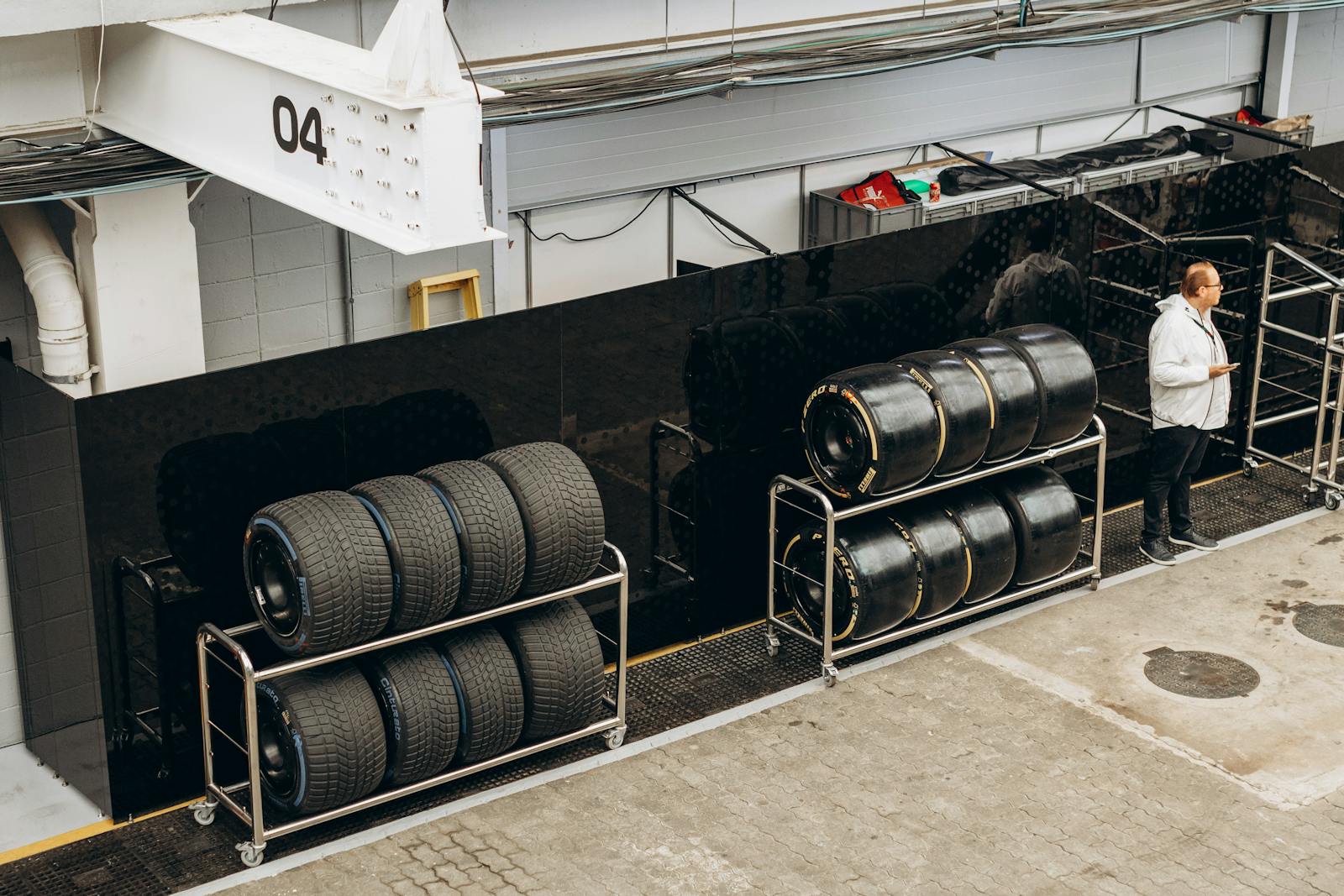
The earlier 13:00 EDT start changes things slightly. 13:00 is just before solar peak — track temperatures could climb into the high 40s°C, accelerating medium-compound degradation. That could push some teams toward a medium → medium → hard two-stop, or a faster pit window around lap 25 on a one-stop.
And then there’s the rain. Any safety car or red flag triggered by weather invalidates the entire strategy script. The intermediate-to-slick crossover timing decides results in those scenarios — and through 2026 so far, Verstappen has been the strongest driver in chaos. Last year’s Miami GP saw two safety cars; teams that switched between one-stop and two-stop strategies mid-race lost the most points. Miami also has a higher-than-average safety-car probability for street circuits.
Sunday outlook — four scenarios
The grid’s top four — Antonelli, Verstappen, Leclerc, Norris — are all genuine win contenders. Four ways this could go:
- Antonelli pole-to-win: simplest scenario. Championship gap reopens to 9+ points. Mercedes narrative reasserts itself.
- Verstappen wins: first Verstappen win of 2026. Confirms Red Bull’s RB22 is back in the fight. Title race becomes a four-way battle (Mercedes, McLaren, Ferrari, Red Bull).
- Leclerc wins: definitive validation of Ferrari’s new floor. Hamilton from P6 makes a 1-2 plausible.
- Norris wins: starts P4 but has the fastest car this weekend. Has to pick off Antonelli, Verstappen, and Leclerc one by one. Turn 1 chaos + clean boost + Piastri recovering from P7 could deliver another McLaren 1-2.
And then there’s rain. One safety car or red flag and the grid order stops mattering. Miami’s medium-stop becomes an intermediate-to-slick gamble, and that historically favors Verstappen. Last year Miami had two safety cars, and the cars that flipped between one-stop and two-stop lost the most. Build a 5-10% rain chaos scenario into your prediction.
What to watch in the first five laps
Miami’s opening laps are usually decisive. The 1.6 km run to Turn 1 is one of the longest braking zones on the calendar, and 2026’s active aero now lets the second-row cars pull alongside the front row before the first apex. Three things will define lap one:
- Antonelli’s start consistency. He’s had two slow getaways already this season (China, Japan). If he gets dragged behind Verstappen at Turn 1, his entire race becomes a fuel-and-tyre management exercise from P2.
- The Verstappen vs Leclerc battle into Turn 1. Verstappen rarely loses these. Leclerc rarely backs out. Expect contact risk in the top three.
- Norris’s overtake mode usage. From P4 with the season’s fastest car, the most efficient strategy is using Overtake Mode aggressively in laps 2-5 to clear Leclerc before the first stop window opens. If McLaren has the boost issue clean, this happens early.
Beyond that, watch the Russell vs Hamilton duel for P5-P6. With teammate Antonelli running at the front, Russell’s race becomes about damage limitation in the title fight. Hamilton in P6 with a fast Ferrari has the most overtaking ammunition behind him on the grid.
One more variable: Mercedes’ two-car strategy. With Antonelli leading and Russell starting P5, expect Mercedes to split strategies — Antonelli on a defensive medium-medium one-stop, Russell on a more aggressive medium-hard offset to undercut Verstappen if the gap closes. That makes Russell’s first stint pace one of the most informative data points of the race. If he can hang with the leaders into lap 15, Mercedes potentially has both cars on the podium.
Miami Saturday at a glance
- Sprint winner: Lando Norris (first 2026 win, first non-Mercedes 2026 win)
- Sprint P2: Oscar Piastri — McLaren 1-2
- Antonelli penalty: 4 track-limits violations → +5 seconds → P4 to P6
- Main quali pole: Kimi Antonelli 1:27.798
- Main quali P2: Max Verstappen (first 2026 front row)
- Main quali P3: Charles Leclerc (Ferrari new floor working)
- Main quali P4: Lando Norris (recovered from Q2 boost issue)
- Championship gap: Antonelli vs Russell 9pt → 7pt
- Sunday GP start: 16:00 → 13:00 EDT (02:00 KST May 4) — moved up 3 hours due to thunderstorm threat
Closing — the season is genuinely shifting
Miami Saturday was the first real turning point of the 2026 season. Mercedes’s dominance cracked (Sprint), McLaren returned (Norris’s win), Red Bull is closing in (Verstappen P2), and Ferrari has to be taken seriously (Leclerc P3).
And yet Antonelli answering with pole in main qualifying is also meaningful. Nineteen-year-old recovery plus Mercedes W17’s underlying pace still being grid-leading — that’s a championship leader’s profile. Sunday starts with a 7-point gap.
Korea time: 02:00 KST on Monday May 4. Tune in, check the radar one more time, and decide whether you can do a 02:00 wakeup. This is one race that could genuinely turn the title fight. Race recap will follow once Sunday’s done.