
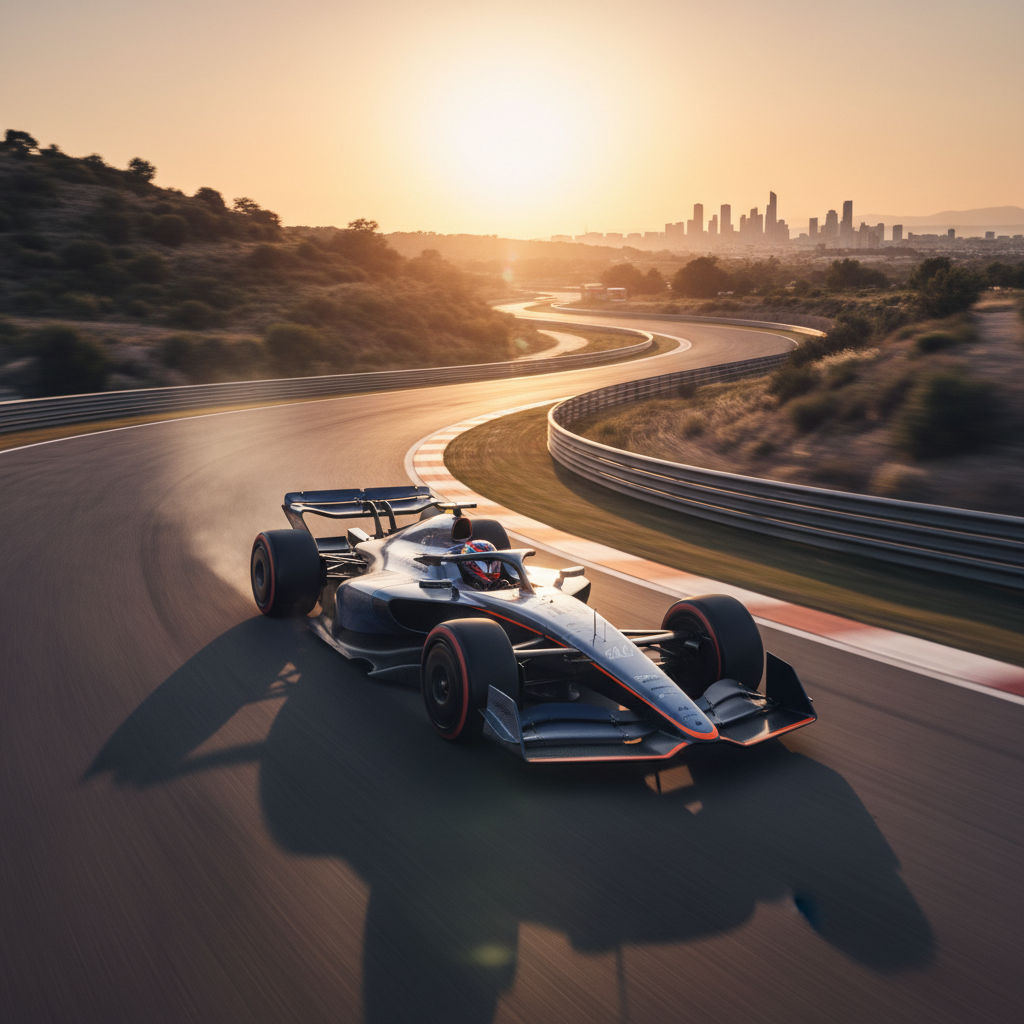
April 20: FIA Reaches Unanimous Agreement — Effective Before Miami GP
Eleven days after the April 9 emergency meeting, the F1 2026 regulation crisis that erupted just three rounds into the season has been resolved. On Monday, April 20, the FIA, all 10 team representatives, power unit manufacturer CEOs, and FOM reached unanimous agreement via online meeting. After WMSC (World Motor Sport Council) e-vote, the changes will take effect before the Miami GP on May 3.
This consensus was forged from data across the Australia, China, and Japan GPs, driver feedback, and Bearman’s 50G crash at Suzuka. The fix is laser-focused: chassis (aero/active aero) untouched, attention paid only to power unit energy management and safety systems.
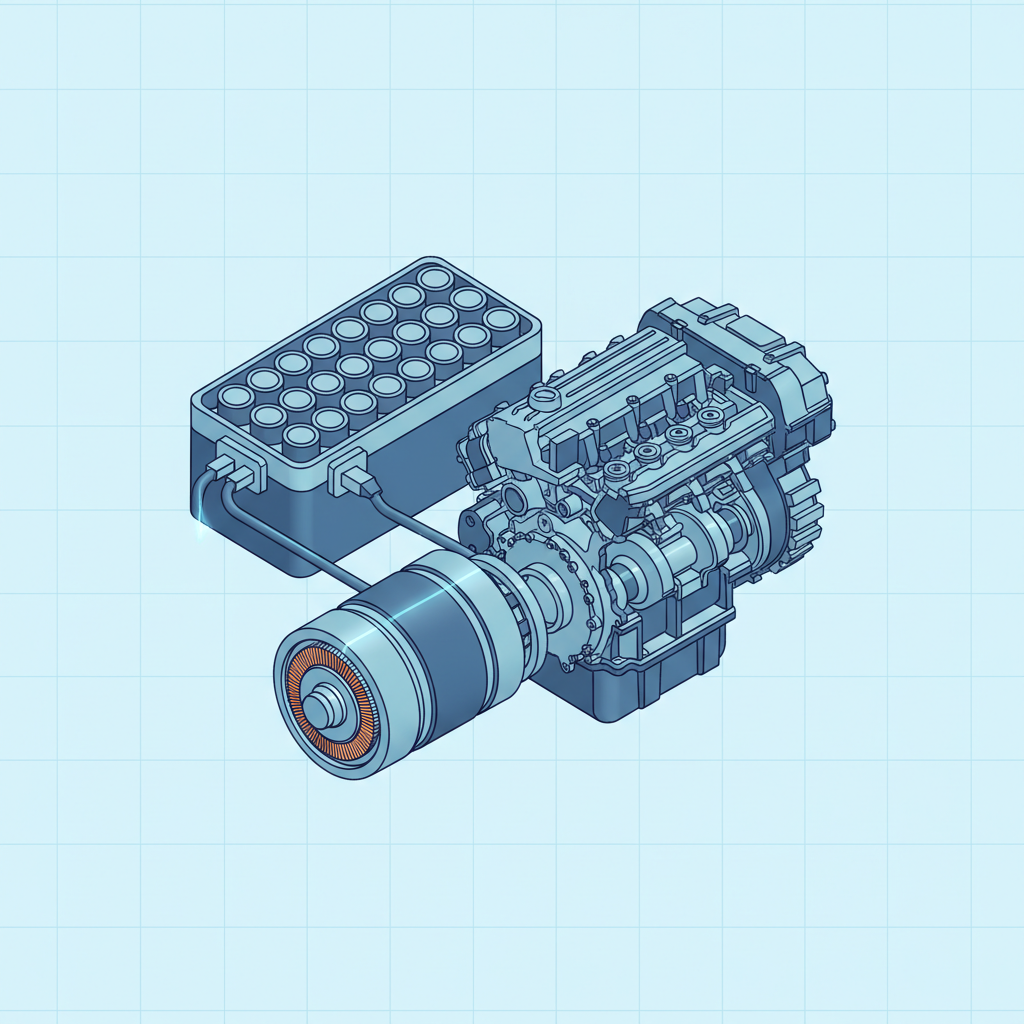
Six Key Changes — At a Glance
Six fine-tunings were finalized in the agreement. Before vs. after, side by side:
| Item | Before | After | Intent |
|---|---|---|---|
| Qualifying regen cap | 8MJ | 7MJ | Suppress excessive harvesting, encourage full throttle |
| Low-energy circuits | 8 | 12 | Safety on high-energy tracks |
| Superclip duration | (current) | 2–4 seconds | Reduce driver burden |
| Superclip peak power | 250kW | 350kW | Shorter regen, sharper bursts |
| Race boost cap | (current) | +150kW max | Guarantee overtake mode performance |
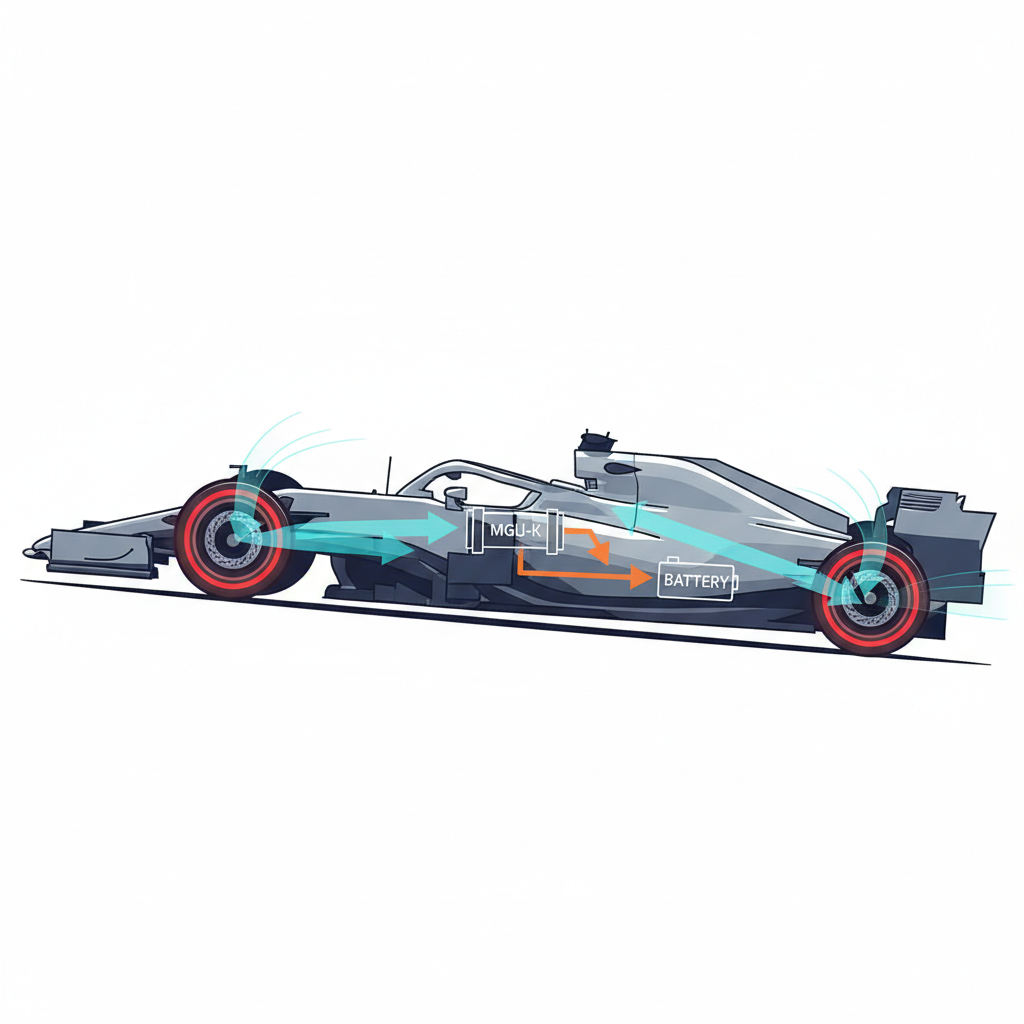
| MGU-K deploy zones | 350kW everywhere | 350kW only on acceleration, 250kW elsewhere | Eliminate lift-and-coast |
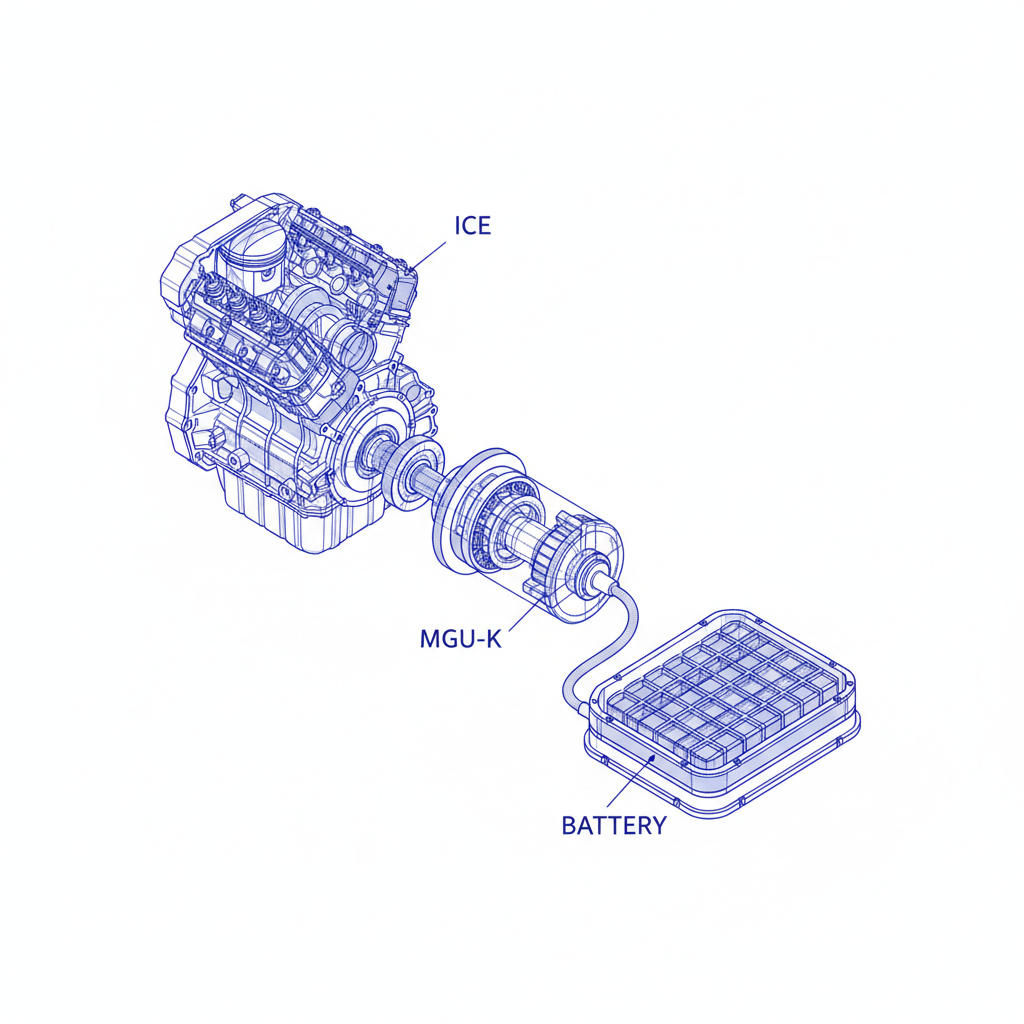
New Safety Systems — Driven by Bearman’s Crash
Oliver Bearman’s 50G impact at Suzuka was the decisive trigger for the safety package. The GPDA’s strong concern about 50+ km/h speed differentials between boost and non-boost cars at the end of straights has been directly addressed.
Three safety systems will be trialed at the Miami GP before formal adoption:
- Auto-detection at start: If abnormally low acceleration is detected after clutch release (e.g., engine stall, ECU error), MGU-K auto-deploys to guarantee minimum acceleration. No sporting advantage granted.
- Rear/side flashing lights: When the same auto-detection triggers, visual warning to following cars. Pre-emptive collision prevention.
- Formation lap energy counter reset: Energy reserves automatically reset at formation lap start for consistent starting conditions.
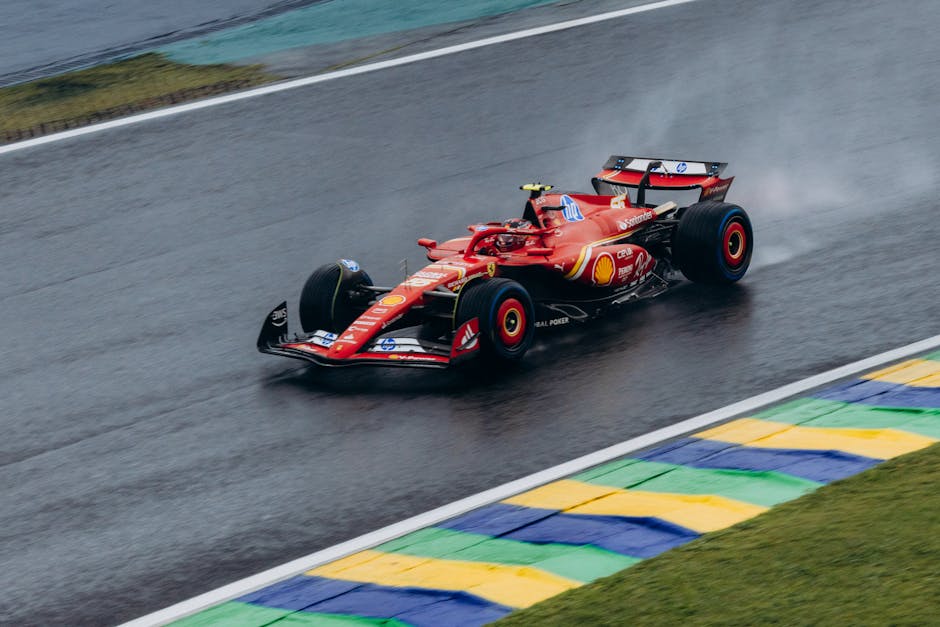
Wet Weather Rules Tweaked Too — Intermediate + ERS Coordination
Through the chaos of the Australian GP wet conditions, feedback poured in about ERS torque control problems in rain. This was bundled into the agreement:
- Intermediate tire blanket temperature increased (better warm-up efficiency)
- In wet conditions, ERS deployment auto-reduced for improved torque control (lower spin risk)
- Wet condition light system simplified
What Didn’t Change — The Big Picture Holds
The Verstappen-style “scrap the rules entirely” position from 11 days ago was not adopted. The core 2026 framework remains intact:
- 50:50 ICE/electric split — unchanged (current ratio holds)
- MGU-H abolition — unchanged (Audi/Honda RBPT entered with no-MGU-H architecture; can’t reverse)
- Active aero (X-mode/Z-mode) — unchanged
- Overtake mode — unchanged
- Sustainable fuels — unchanged
- New PU manufacturer entry environment (Red Bull Ford Powertrains, etc.) — unchanged
This change is “core philosophy preserved + operational fine-tuning”. Ferrari’s “no changes” stance and Audi/Honda RBPT/Red Bull Ford’s massive investment in the new architecture are all protected by leaving the framework alone.
Driver/Team Reactions — Restrained Welcome
Right before the April 9 meeting, Verstappen’s “considering retirement” remarks built pressure, and GPDA chairman Alexander Wurz took a hardline “unacceptable from safety perspective” stance. The unanimous result 11 days later didn’t deliver everything they demanded — yet consensus was achievable because:
- Shorter Superclip + 350kW boost → directly addresses the “long regen” problem drivers hated most
- Safety automation → GPDA concerns immediately reflected
- Chassis untouched → zero in-season R&D burden for teams
- 50:50 / MGU-H abolition protected → investment stability for PU manufacturers
Effective Before Miami GP — What to Watch For
The Miami GP on May 3 will be the first real-world test of these fine-tunings. Key viewing points:
- Qualifying: 7MJ regen cap + shortened Superclip → will drivers actually attack at full throttle?
- Race start: New auto-detection trial → does it work cleanly without confusing it with false starts?
- Overtaking: +150kW boost cap → will overtake frequency clearly increase?
- Antonelli vs. Verstappen: Will championship leader 19-year-old Antonelli maintain dominance in the fine-tuned environment?
Wrap — F1 Resolves Crisis in 11 Days
A crisis that exploded just three rounds into 2026 was sealed by unanimous agreement in just 11 days. Verstappen’s retirement remarks, Bearman’s 50G crash, Norris’s 56km/h speed-differential data — all of this pressure converged to move the FIA.
The crucial point: this was solved by “fine-tuning, not scrapping the rules”. Unlike the previous meeting’s intense atmosphere, the April 20 consensus came quickly and quietly. Everyone found a compromise where they had more to gain than lose.
Miami GP is the real test bed. If the fine-tunings work, the 2026 regulations survive. If problems flare up again, a second mid-season meeting may follow. Wait until May 3.