
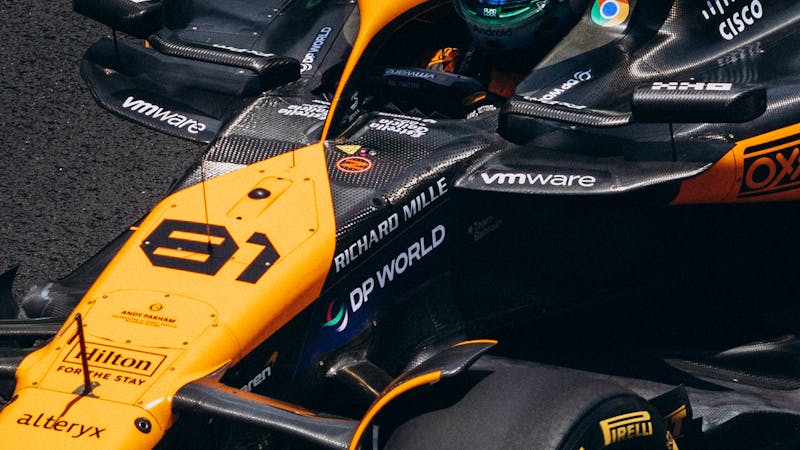
The 2026 Regulation Crisis — Just Three Rounds In
Just three rounds into the 2026 season, Formula 1 is already facing an unprecedented crisis. Through the Australian, Chinese, and Japanese Grands Prix, the severe side effects of the new power unit regulations have surfaced one by one. Lift-and-coast driving has become the norm, extreme speed drop-offs at the end of straights have shocked fans, and qualifying now depends more on car algorithms than driver skill — all of this has simultaneously drawn anger from drivers, teams, and fans worldwide.
The 2026 regulations were supposed to be a grand transformation for F1’s future. Sustainable fuels, a massive expansion of electric power, and the introduction of active aerodynamics represented the most radical technical changes in F1 history. But the real-world results have fallen far short of expectations. On April 9, the FIA and F1 convened an emergency technical meeting in London, bringing together technical directors from all 10 teams, engine manufacturer representatives, and FIA and FOM leadership in an extraordinary gathering.
The 2026 Power Unit — What Changed
To understand the crisis, you need to understand the power unit restructuring. Until the previous season, F1 cars ran approximately 80% ICE (internal combustion engine) power and 20% MGU-K (kinetic energy recovery). From 2026, this ratio shifted dramatically to ICE 400kW (~544hp) vs. Battery 350kW (~476hp) — roughly a 55:45 power split.
Electric power now accounts for nearly half of the total output. In theory, this represents sustainability and technological innovation. In practice, it has unleashed a cascade of unintended consequences. Battery capacity is limited, but the electrical energy demand per lap is enormous. Drivers must repeatedly lift off the throttle at the end of straights to conserve energy — the dreaded “lift-and-coast.”
The abolition of the MGU-H (heat energy recovery) has made things worse. Previously, exhaust heat could be converted to electricity for battery charging. Now that pathway is gone. Cars can only recover energy during braking and deceleration, making energy management the defining element of every race.
Three Critical Problems
1. Safety — Bearman’s Suzuka Crash
The most urgent issue is safety. At Suzuka, Oliver Bearman was involved in a high-speed collision caused by a structural flaw in the 2026 regulations. Speed differentials of over 50 km/h between cars in boost mode and those with depleted batteries created extreme rear-end collision risks on the same straight. GPDA Chairman Alex Wurz demanded: “From a safety standpoint, we simply must prohibit sudden surges in power output at top speed.”
2. The Death of Qualifying
One of the most beloved moments in F1 is watching drivers push beyond the limit on a Q3 flying lap. The 2026 qualifying has stripped all of that away. Drivers must constantly manage lift-and-coast and super clipping, while the car’s energy management algorithms effectively determine performance.
3. Straight-Line Speed Collapse
According to Lando Norris, cars experience speed drops of 56 km/h on straights. The very identity of F1 as the world’s fastest racing series is being questioned.
The April 9 FIA Emergency Meeting — Five Key Agenda Items
The emergency meeting in London on April 9 focused primarily on short-term fixes that could be implemented before the Miami GP (May 3).
Item 1: Simplify Regulations Around Driver Input
Reduce the influence of electronic control systems and ensure performance depends more on driver skill and instinct. The goal: restore the feeling of “pure racing.”
Item 2: Raise Super Clipping Threshold (250kW → 350kW)
The most likely change. Raising the super clipping limit to match lift-and-coast at 350kW would allow drivers to recover sufficient energy without slowing down on straights.
Item 3: Optimize Energy Deployment
Reduce maximum deployment power from 350kW to balance energy distribution across an entire lap. This approach has been under consideration by the FIA since 2025 and was tested during pre-season Bahrain testing.
Item 4: Lower Energy Recovery Limits (9MJ → 6MJ)
Reducing recovery targets means less need for deceleration. The trade-off: slower single-lap times — 7MJ means ~1 second loss, 6MJ means 2+ seconds. But the consensus is that “a slightly slower car driven aggressively is more appealing than a faster car driven conservatively.”
Item 5: Unrestricted Active Aero in Qualifying
Allow free use of active aerodynamics during Saturday qualifying, removing predefined zones. Similar to the unrestricted DRS seen in 2011-2012 qualifying sessions.
Meeting Outcome — Nothing Confirmed Yet
The most important takeaway from April 9: no regulation changes have been finalized.
The FIA released an official statement: “There was constructive dialogue on difficult topics, especially considering the competitive nature of the parties involved,” adding that “while the events to date have provided exciting racing, there was a commitment to making tweaks to some aspects of the regulations in the area of energy management.”
The key word is “commitment” — not “confirmation.” This was an analysis and proposal phase; actual decisions were deferred to the April 20 final meeting. All regulation changes require approval from the FIA World Motor Sport Council (WMSC).
Driver Reactions — Voices Grow Louder After the Meeting
When the results of the April 9 meeting became known — “constructive dialogue” but no concrete changes — some drivers couldn’t hide their disappointment.

Max Verstappen (Red Bull Racing)
Photo: Stepro, CC BY-SA 4.0
Max Verstappen — “If it’s not fun, I’m leaving”
The four-time world champion’s reaction was the most shocking. After qualifying P11 at the Japanese GP, Verstappen publicly declared he would leave F1 if the regulations don’t change. “My contract runs until 2028, but it depends on the new rules. If they’re not fun, I don’t really see myself hanging around.”
It emerged that his Red Bull contract includes an exit clause specifically tied to the 2026 regulations. He called the new rules “Formula E on steroids” and “anti-driving,” adding: “If someone likes this, then you really don’t know what racing is about.” On life after F1: “Other racing categories, more time with family — once I close the chapter, it’s closed. I don’t see myself stopping and coming back.”

Lewis Hamilton (Scuderia Ferrari)
Photo: UK Government, OGL v3.0
Lewis Hamilton — “This is what racing should be”
The seven-time champion took the opposite stance. “That is how racing should be. It should be back and forth, back and forth. It shouldn’t be like one move is done and then that’s it.”
Critics pointed out that Ferrari’s superior battery management system puts Hamilton in a privileged position. Indeed, Ferrari adopted a smaller turbocharger to reduce turbine inertia — widely considered the team that best adapted to the new regulations.

Carlos Sainz (Williams Racing)
Photo: CC BY-SA 4.0
Carlos Sainz — “Just fixing qualifying isn’t enough”
Also a GPDA director, Sainz was frustrated that the FIA initially proposed fixing only qualifying while leaving racing unchanged. “We have been warning this kind of accident will always happen. In Suzuka, we were lucky there was an escape road.” The problem extends across the entire race, not just qualifying.

Charles Leclerc (Scuderia Ferrari)
Photo: Stepro, CC BY-SA 4.0
Charles Leclerc — The thrill of qualifying is gone
A minor throttle input error triggered a power-limiting threshold that wasted his battery, ruining an entire lap. He called the situation “a bit silly” and expressed sadness over the lost intensity that once defined F1 qualifying.
The Drivers’ Group Chat — “Virtually Unanimous Dissatisfaction”
Reports emerged that the drivers’ WhatsApp group chat had been “lit up” with discussion. According to GPDA Chairman Alex Wurz, dissatisfaction with the current regulations is “virtually unanimous.” Wurz proposed implementing standardized software across all teams to control abrupt speed changes.
Team Principals and F1 CEO React
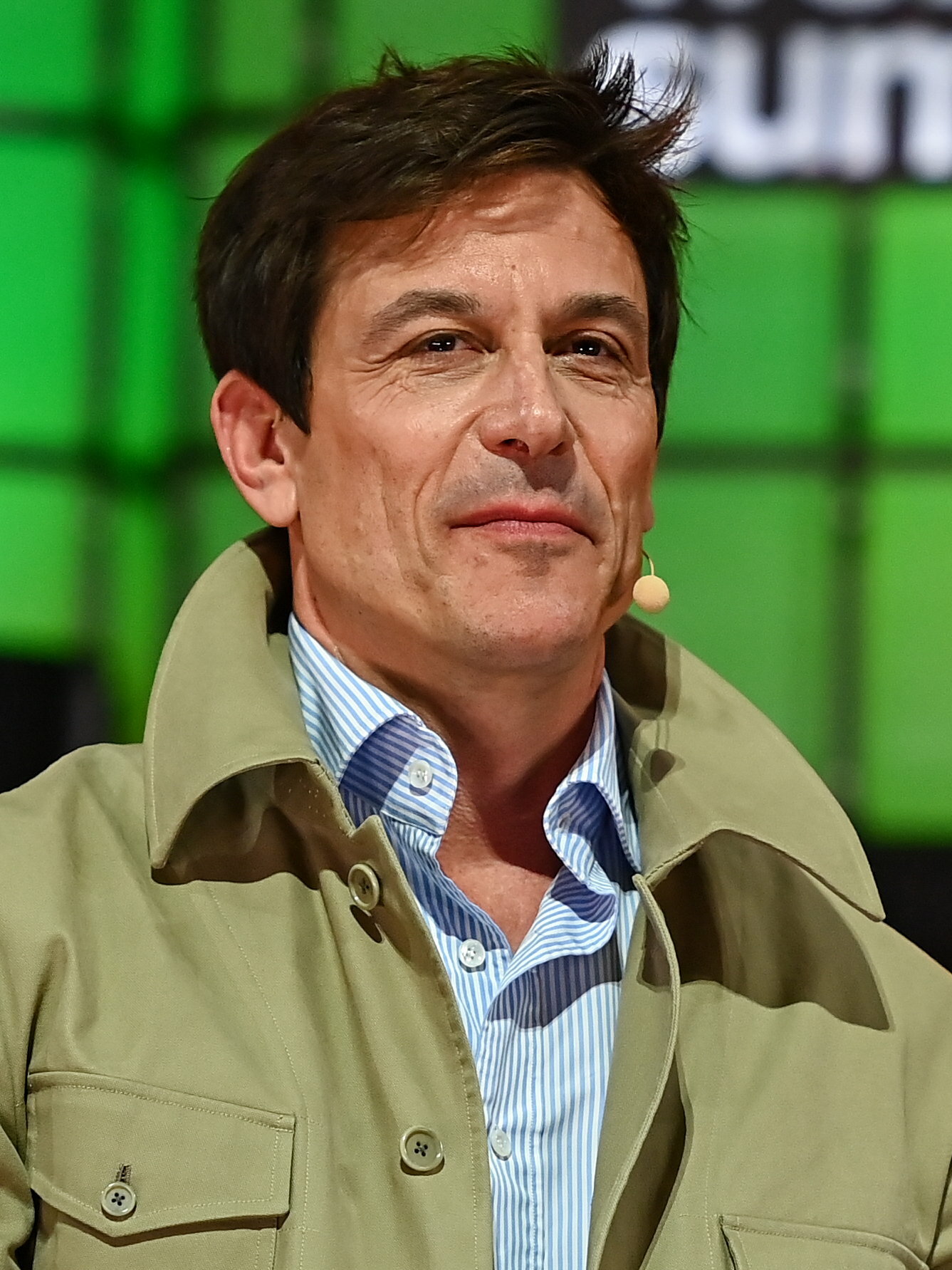
Toto Wolff
(Mercedes)
Toto Wolff — Restoring qualifying is the priority
“If it were up to me — how can we get that one fast, brutal qualifying lap again? How can we reduce the lift and coast? That’s definitely something we need to do.” Interestingly, Wolff responded coolly to Verstappen’s quit threat, suggesting the current yo-yo racing is itself a form of “pure racing.”

Andrea Stella
(McLaren)
Andrea Stella — Safety is number one
Called qualifying “priority number one” while elevating the speed differential safety issue to the most urgent item after Bearman’s crash. Strongly supports raising super clipping to 350kW. Has been consistently raising safety concerns even before the Suzuka incident.

Stefano Domenicali
(F1 CEO)
Domenicali — Pushing back on driver criticism
Called it “wrong” for Verstappen and Hamilton to publicly criticize the regulations. Maintains the direction is correct; only fine-tuning is needed. Fan and media reaction was not favorable toward his stance.
Laurent Mekies (Red Bull) — “We all want full-throttle qualifying”
Red Bull’s new team principal highlighted one clear point of consensus: “If there’s one thing we all agree on — teams, FIA, Formula 1, drivers — it’s that we all want to see qualifying as a full-throttle session.”
Frederic Vasseur (Ferrari) — Against changes
The most controversial position. “When we make even small adjustments, they play into some people’s hands and backfire on others,” strongly opposing mid-season regulation changes. As the team that best adapted to the new rules, Ferrari fears changes could erode their competitive advantage. On race start procedure changes: “Enough is enough.”
The Structural Problem — Why This Happened
The current 2026 car produces roughly 750kW total (ICE 400kW + Battery 350kW, ~1,020hp). The core problem: there isn’t enough battery capacity to sustain this power for an entire lap. When battery energy depletes, the car runs on ICE alone at just 400kW — only 55% of total power. The moment 45% of power disappears, speed drops dramatically.
Two approaches address this: use battery energy more efficiently (Items 2, 3), or reduce total available electrical energy (Item 4). The former maintains speed while fixing the problem; the latter sacrifices some speed but eliminates lift-and-coast entirely. Increasing the fuel-flow limit to boost ICE power was also discussed but carries too much reliability risk for mid-season implementation.
Fan Reaction — Anger Spreading Across Social Media
It’s not just drivers and team principals voicing frustration. Social media has been flooded with mockery — “F1 has become Formula E” — and clips of cars decelerating on straights have been shared millions of times. Long-time fans argue the 2026 regulations are “destroying F1’s DNA,” while some have taken the extreme position that “if Verstappen leaves, F1 is done.”
Yet Hamilton’s “this is real racing” stance has its supporters too. Some fans find the dynamic position changes more exciting than previous seasons where a single overtake ended the battle. A fundamental debate has emerged among fans: should F1 be about pure speed, or strategic racing?
Historical Context — F1 Has Been Here Before
Regulation controversies are nothing new in F1. When hybrid power units arrived in 2014, criticism poured in: “too quiet,” “not real F1.” The 2022 ground effect rule changes brought porpoising that threatened driver safety, forcing the FIA to issue emergency technical directives mid-season.
But 2026 is more severe than any predecessor. An emergency meeting just three rounds in is virtually unprecedented, and a four-time world champion publicly contemplating retirement raises fundamental questions about the sport’s identity. What answer the FIA and F1 produce by April 20 — and whether it satisfies drivers like Verstappen — will define the future of the 2026 season.
What Happens Next — Countdown to Miami
As of April 9, no official regulation changes have been confirmed. But the FIA’s public commitment to energy management adjustments is a significant signal.
- April 15: Sporting Regulations review — qualifying format changes
- April 16: Follow-up technical meeting — implementation details
- April 20: Decisive stakeholder meeting — official vote
- WMSC approval: Final ratification after April 20 consensus
- May 3: Miami GP — potentially the first race under revised rules
Outlook — What Will Actually Change?
Realistically, changes before Miami will be limited. Raising the super clipping threshold (250→350kW) and lowering energy recovery limits (9→6-7MJ) are the most likely short-term measures. These two alone could significantly reduce lift-and-coast frequency and speed drop-off issues.
But the fundamental problem — electric power comprising 45% of the total power unit — may have to wait until 2027. Increasing the fuel-flow limit to boost ICE power carries too much engine reliability risk for this season. The “fundamental changes” Verstappen wants are at least one season away.
The voting dynamics at the April 20 meeting will be fascinating. Vasseur’s Ferrari will try to minimize changes, while the remaining nine teams will push for significant revisions. The FIA retains the authority to force certain changes under the banner of safety — even without unanimous consent. Verstappen’s comment that “if it’s all about safety, it’s easy to fix things” appears to target precisely this FIA prerogative.
Verstappen’s “anti-racing” versus Hamilton’s “best racing” — two legends with diametrically opposed views may best capture the complex nature of these regulations. One sees the death of the sport; the other sees its revival. Perhaps the real problem isn’t the regulations themselves, but that consensus on “what F1 should be” hasn’t been reached.
One thing is certain: the April 20 vote won’t be merely about technical specification tweaks. It will be a choice about F1’s direction — whether to remain a sport of pure speed, or to evolve into an energy strategy chess match. If you’re an F1 fan, these three weeks demand your attention.