
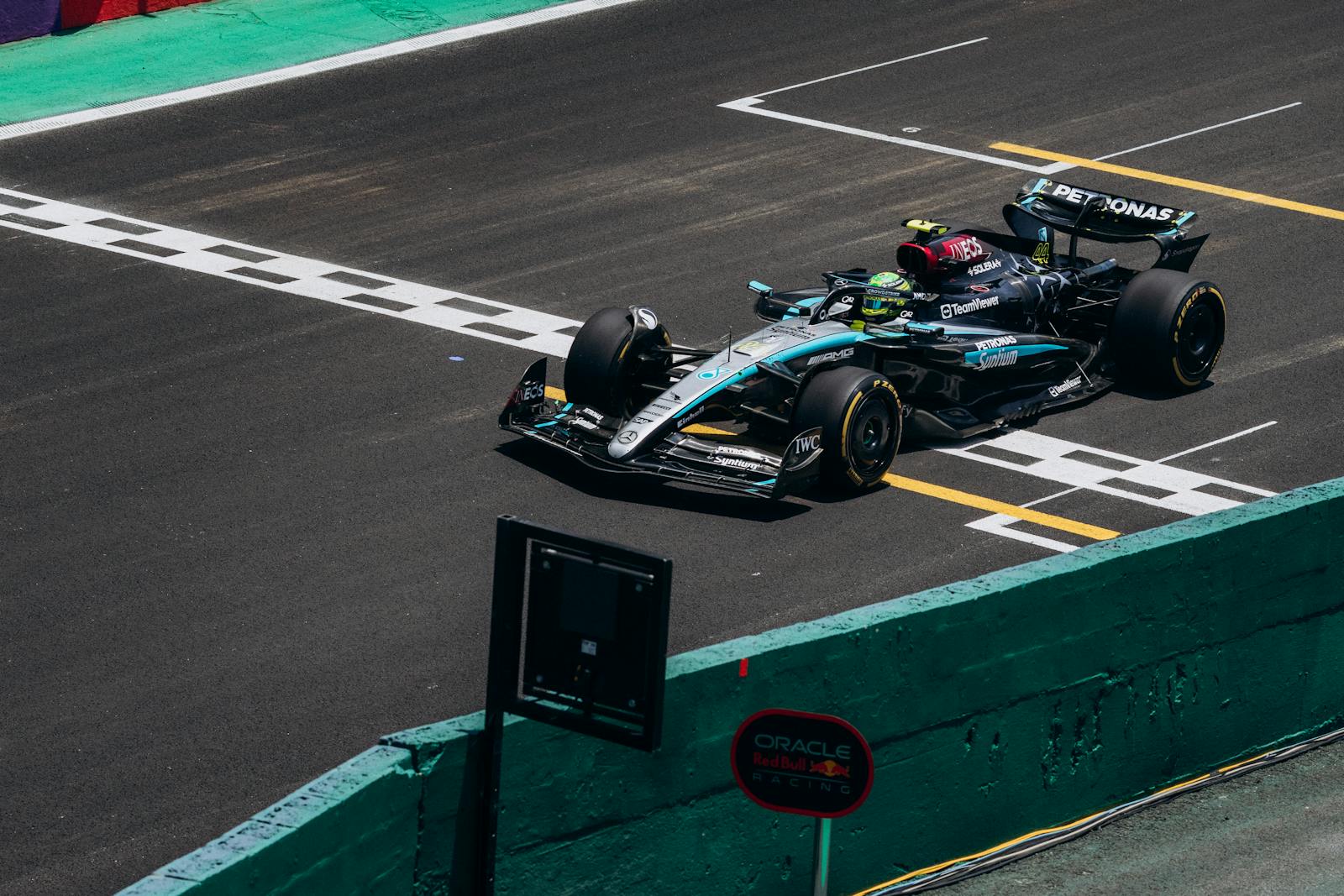
The lights are on again at Miami International Autodrome. The 2026 Miami Grand Prix runs from May 1 to 3, and this weekend is on the Sprint format — meaning a single 90-minute FP1 to figure out setup and tyre data. Stack that on top of the season’s still-bedding-in 2026 regulations — active aerodynamics, the new power unit, Overtake Mode — and Miami becomes the cleanest stage so far for showing how this new generation of F1 actually behaves on a tight, hot, concrete-walled street circuit.
And then on Saturday morning, the headline arrived. Lando Norris took pole position for the first time in 2026 — and crucially, the first non-Mercedes pole of the season. Let’s break this weekend down step by step.
Why Miami International Autodrome is so unforgiving
Before the results, the track itself deserves a paragraph. Miami International Autodrome is a 5.412 km temporary street circuit wrapped around Hard Rock Stadium. Nineteen corners, two long straights, and concrete walls hugging every corner exit. One small slip and the next thing on screen is a yellow flag and a DNF.
Miami’s surface adds another layer of difficulty. The mix of concrete patches and aggressive aggregate chews tyres faster than the average circuit, and Florida in May reliably pushes ambient temperatures past 30°C. Last year, track temperatures hit 50°C in some sessions, and this weekend’s forecast shows another 40°C-plus track for Saturday and Sunday. So Miami doesn’t reward the fastest car — it rewards the car that can hold that pace for an hour straight.
FP1 — Ferrari were the first to put their hand up
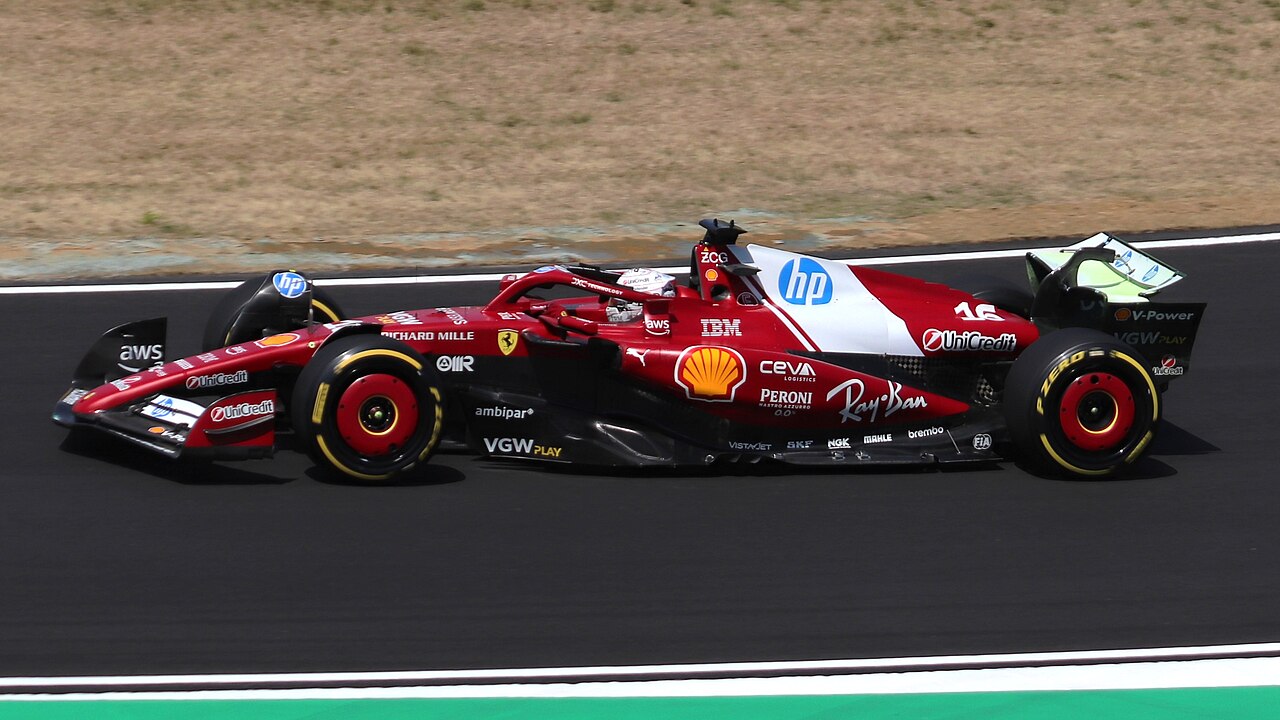
Charles Leclerc topped FP1 with a 1m 29.310s. It came on his second push lap, on the softest compound. Max Verstappen was three-tenths back in second, with Oscar Piastri leading the McLaren charge in third. Lewis Hamilton was fourth, Kimi Antonelli fifth on hards, and George Russell only sixth despite running the soft compound. It was the cleanest practice pace Ferrari have shown all season.
Mercedes were the surprise of the session. The team currently leading both championships looked the most uncomfortable in the cockpit. The pace was there in flashes, but the combination of Miami’s concrete surface and 30°C-plus track temperatures broke their tyre management. Antonelli’s fifth came on a hard run; Russell pushed on softs and still couldn’t crack the top five. After three rounds of dominance, Mercedes had their first scrappy Friday of 2026.
FP1 was extended from the standard 60 minutes to 90 minutes precisely because of the Sprint format. A normal race weekend gives teams three hours of running across FP1, FP2, and FP3. A Sprint weekend gives 90 minutes — and into that single window every team has to compress setup work, tyre degradation runs, Sprint race pace, and Sunday race simulation. So the FP1 numbers carry more weight than they normally would.
The long-run picture also flattered Ferrari. Leclerc’s five-lap medium average sat in the high 1m 31s; Antonelli on the same compound ran low 1m 32s; Verstappen was in the mid 1m 32s. The gap looks small, but Miami is a track where losing a tenth in one corner snowballs to five seconds across a stint. So even those small margins matter.
Sprint Qualifying — Norris ends Mercedes’ streak
Sprint Qualifying followed FP1 directly, and that’s where the real story of the weekend turned up.
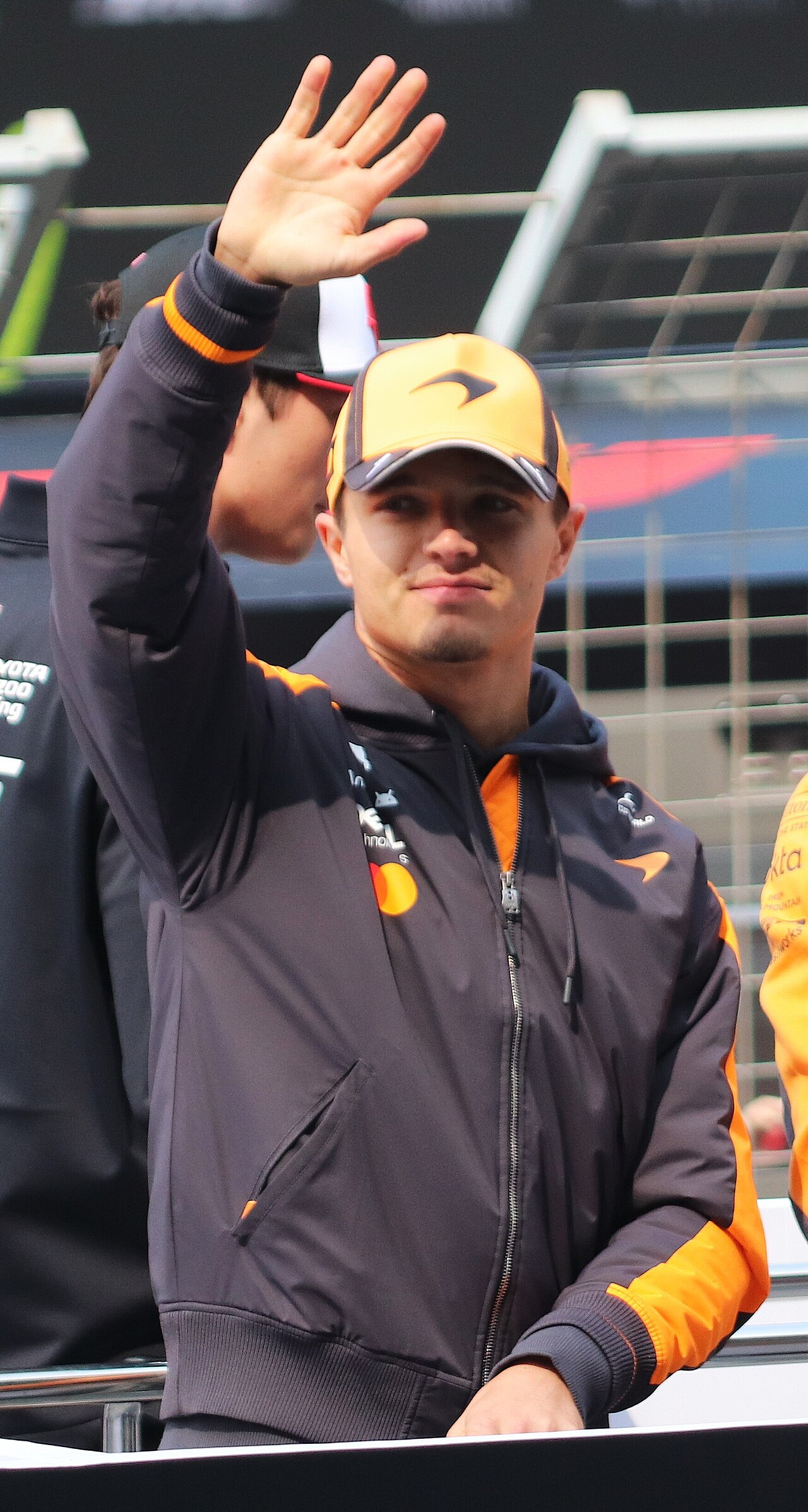
Lando Norris took pole with a 1m 27.869s. It was the first non-Mercedes pole of the 2026 F1 season. Kimi Antonelli was second, +0.222s back. Oscar Piastri was third. Charles Leclerc led SQ2 but slipped to fourth in SQ3, with Max Verstappen fifth and George Russell sixth.
Norris’s interview line summed up the weekend: “Through SQ2 it was awful. I got out of the car and had a real argument with the team. We threw everything at the last run.” A radio call plus a setup change came the moment SQ2 ended, and SQ3 unlocked. That’s a useful tell for the 2026 cars in general — one click of setup either way is the difference between a top-five and a Q2 exit. Active aero plus the new power unit have produced a very narrow setup window.
Why this pole matters: through every prior 2026 qualifying session this season, Mercedes had taken the top spot. Antonelli is now the youngest driver to ever lead the F1 World Championship at 19 years, 6 months, and 25 days. Russell won in Australia. Mercedes lead the constructors by 45 points. Norris breaking that pole streak is the first concrete signal that the lock isn’t permanent.
One quiet sub-plot in SQ: Liam Lawson (Racing Bulls) was disqualified from SQ1 over a weight check, with the team protesting the measurement procedure. The result wasn’t overturned, but it underlines how tight the 2026 weight management has become. The new power unit and larger battery package have pushed the cars right onto the minimum-weight knife edge, and every team is running setups that walk that line.
One Sprint pole isn’t a Grand Prix pole, and a Grand Prix pole isn’t a win. Miami’s track grip improves dramatically through the weekend, so Saturday’s conditions and Sunday’s conditions read very differently. The biggest unknown ahead of Sunday is what 18 laps of Sprint racing on Saturday tells us about tyre degradation — and what that implies for race day.
Has 2026 active aero actually increased overtaking?
It’s the question I get most from people watching this season for the first time. Short version: yes, but the shape of overtaking has changed.
DRS is gone for 2026. In its place are two systems working together:
- Active Aero: both the front and rear wings move into a low-drag “open” state on designated straights, then switch back to a high-downforce “closed” state through corners. The crucial difference from DRS is that everyone has it on every straight, all the time — there’s no one-second following condition.
- Overtake Mode: this is the gated piece. If you reach a designated point on the track within one second of the car ahead, you unlock an extra +0.5MJ of electrical energy for the next lap, allowing you to sustain higher speeds longer.
- New Power Unit: a roughly 50-50 split between internal combustion and electrical output. ICE power is reduced; the electric motor’s output has roughly tripled. The MGU-H heat recovery system has been retired entirely.
So 2026 overtaking happens in two phases. First, you use active aero to close the gap. Then, once you’re inside one second, you deploy Overtake Mode to actually complete the move. In the DRS era, just getting close was usually enough — the pass was almost automatic. Now, both cars are managing their energy reserves at the same time, and the question becomes when to charge and when to deploy. It’s a brain game on top of the speed game.
One of the reasons Antonelli was able to win in Japan was that his energy management at the end of the race was clinical. He held back battery deployment in the middle stint and unleashed it across the final five laps to stretch the gap. Across the opening four rounds, the biggest visible change is that straight-line pace differences have compressed significantly. Cars are running closer together, and overtake attempts are up. But “easy” overtakes are gone. You can be inside a second and still get held up if you don’t time Overtake Mode well.
Miami is the perfect stress test for this system. Two roughly 1.6 km straights, nineteen 90-degree corners, and the heaviest overtaking opportunity of all comes at the slow Turn 17 hairpin off the back straight. How many overtakes happen at that single corner on Sunday will probably end up the headline number for whether the 2026 rules are doing what they were designed to do. Saturday’s Sprint will tell us which teams have actually adapted to the system.
Why is Mercedes so far ahead?
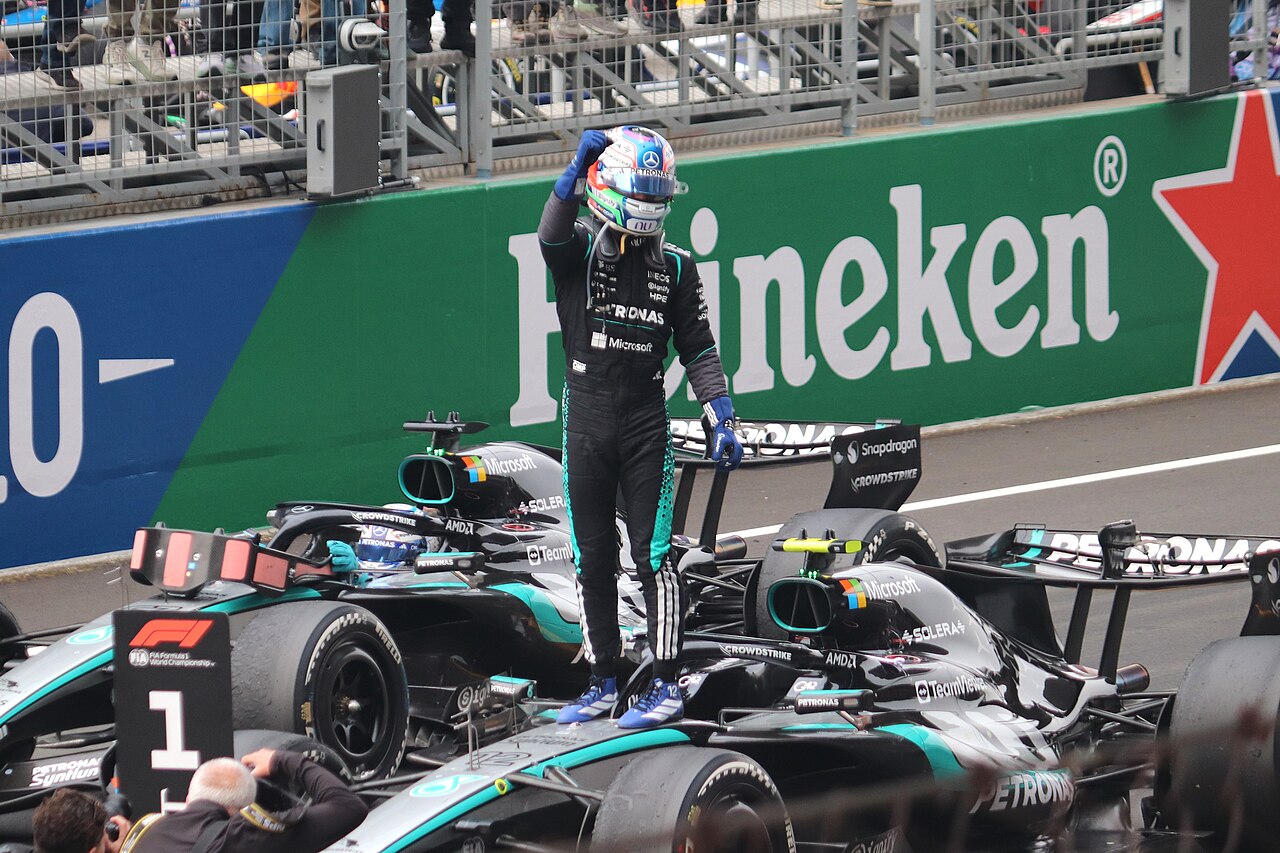
This is the second most asked question this season, and the answer is largely already written.
The 2026 power unit isn’t a refinement of the previous generation; it’s a different machine. The 50-50 split is the headline number. Internal combustion power is down. Electric motor output is roughly tripled. Half the car’s output now comes from the battery, and the expensive, complex MGU-H is gone.
That fundamentally favors Mercedes. They were the team that conquered the V6 hybrid era starting in 2014. They have the deepest historical data and operational know-how on battery management, recovery profiles, and electrical deployment strategy in the entire paddock. When the regulations make electrical output half the car’s total power, that institutional knowledge converts directly into lap time. Antonelli and Russell running 1-2 in the championship isn’t because the drivers are simply on form — it’s because the car under them is the fastest car on the grid.
Then there’s the Antonelli factor. Nineteen years old, second full season. He’s the ideal age to adapt to brand-new regulations. He doesn’t have a decade of “DRS works like this” muscle memory weighing him down. Active aero plus Overtake Mode plus energy management is just what driving a Formula 1 car means to him. Veterans like Verstappen and Hamilton have to actively unlearn old instincts in some scenarios — and that’s where the gap shows up on Sundays.
And the regulations may have applied equally to everyone, but preparation didn’t. The widely held view in the paddock is that Mercedes shifted serious resources onto the 2026 power unit program from the second half of 2024 — and that 2025’s somewhat anonymous mid-pack run was, in part, the cost of that bet. The 45-point constructor’s lead through three rounds suggests that bet is paying off.
Everyone else: Ferrari’s floor, Red Bull’s recovery
Ferrari brought a new floor package to Miami, and Leclerc topping FP1 was no accident. The drop to fourth in SQ3 suggests they haven’t yet locked the setup in around the new aero, but that’s a much smaller problem than not having the pace at all. Hamilton looked the most settled in the SF-26 he’s looked all year, which is its own important data point. Miami could be Ferrari’s first real counter-punch of 2026.
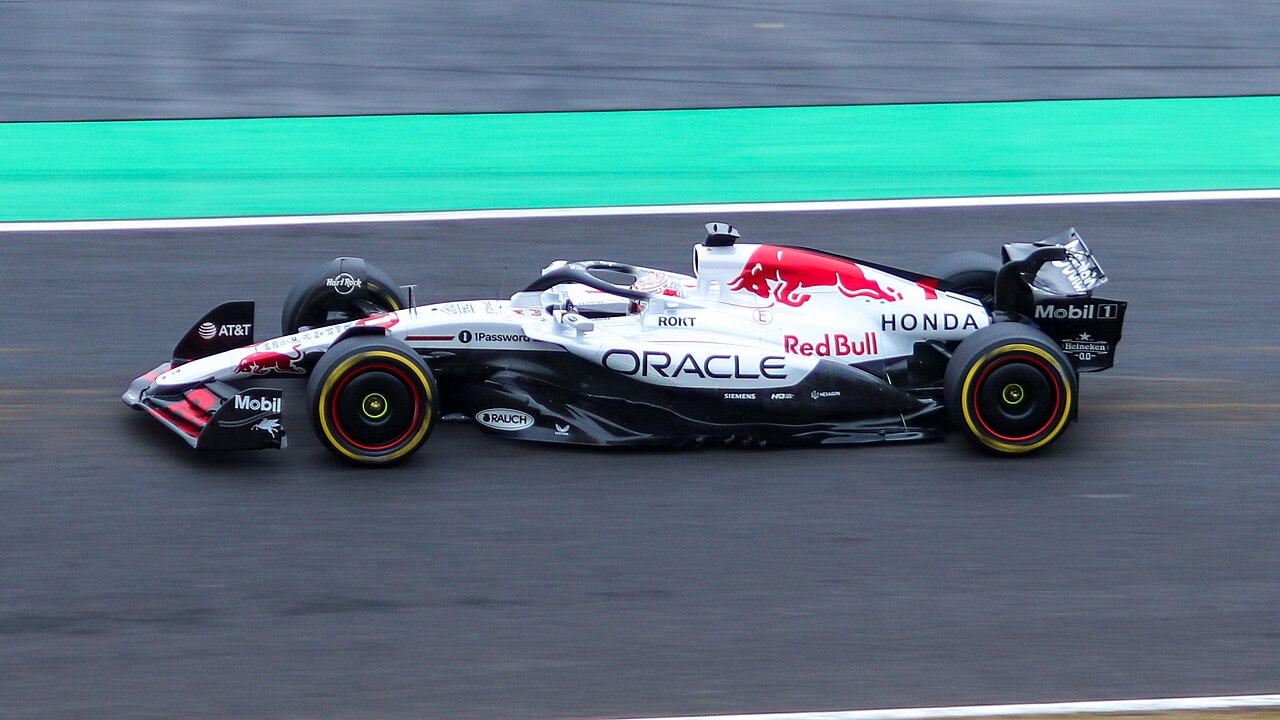
Red Bull’s most interesting line of the weekend came from Verstappen, who described the car as “more together” than earlier in the season. The early balance issues seem to be largely resolved. The pace, though, is still a tick behind Mercedes. Sprint fifth, FP1 second. Verstappen alone is always a variable, but the RB22 isn’t yet a pole-pace machine. They’re waiting on the next development package — reportedly due around Imola — to genuinely close that gap.
McLaren made the biggest jump of any team this weekend. Pole for Norris and third for Piastri represent a clear step. The question is whether that pace holds across Saturday’s Sprint and Sunday’s race. Norris has had genuine pace all season; what was missing was a setup that worked race-to-race. Miami may be where they found it. Piastri also looked level with Norris for the first time since the Australian GP.
The midfield — Alpine, Williams, Aston Martin — is, as always at Miami, fighting the concrete walls as much as the rivals. Miami punishes the midfield disproportionately. One small mistake on a kerb and a weekend ends. Alex Albon’s early SQ1 exit at Williams came down to a fractional slide at Turn 17 on his last push lap. That’s the margin you operate in here.
The PU supplier picture in 2026 — five engines, one pecking order
Underneath the team-level results sits the more interesting structural story: 2026 isn’t just a regulation reset. It’s a power unit supplier reset. Five manufacturers are now on the grid, and the early gaps tell us a lot about who got the new architecture right.
Mercedes are clearly leading on the PU front. They supply Mercedes itself, Williams, Aston Martin, and Alpine in 2026 — and notably, Williams have looked more competitive than they have in a decade in the early rounds, which is its own indirect signal that the Mercedes power unit is delivering. The depth of their hybrid-era data has translated directly into a stronger battery deployment profile across a race distance.
Ferrari are second in the PU pecking order based on early data. Their unit appears strong on outright power but slightly less efficient on energy recovery in the closing laps. That’s the same pattern we saw in the V6 hybrid era too — fast over one lap, slightly behind Mercedes over a stint.
Honda RBPT (Red Bull’s revived in-house program with Honda technical input) has shown flashes of pace but consistency issues. Verstappen’s “more together” line this weekend was meaningful precisely because the early season had a lot of “not together” days.
Audi arrived as a brand-new manufacturer with the Sauber takeover. Through three rounds, they sit at the back of the PU performance order — about where realistic expectations were set, given they joined the regulations cycle from a standing start. They’ve signaled that 2027 is the realistic target for genuine midfield competitiveness.
The interesting watch for the rest of 2026 is whether any of those gaps close. PU upgrades are limited under the regulations, but driveability and software refinements are largely unrestricted — and that’s where most of the early-season improvement will come from.
Sunday outlook
Where the weekend stands going into Saturday’s Sprint:
- McLaren (Norris): Sprint pole. Best chance of Sunday pole in the field. But race pace still has to hold up across a full Grand Prix distance.
- Mercedes (Antonelli & Russell): Probably still the fastest car in absolute terms. The FP1 struggle reads as temporary. Saturday’s Sprint is the real test.
- Ferrari (Leclerc & Hamilton): New floor delivers FP1 pace. Setup hasn’t locked in for qualifying. If they fix that overnight, they’re in win contention.
- Red Bull (Verstappen): A wildcard for a one-off result. Whether the “more together” car is real-real or just better than before will be visible Sunday.
Antonelli’s championship lead is nine points over Russell. The internal Mercedes battle is the team’s biggest medium-term problem, not the rest of the grid. Toto Wolff has already publicly warned that an in-team title fight risks costing the constructors’ lead through accumulated lost points. That’s the most realistic route by which Mercedes loses the championship — not to a rival, but to themselves.
Sprint race start: Saturday afternoon Miami time. Grand Prix qualifying: Saturday evening Miami time. Race: Sunday afternoon. If you’re in Asia or Europe, expect at least one alarm clock you won’t enjoy. But this is shaping up to be a weekend worth losing sleep over — possibly the moment the 2026 season’s narrative turns.
Closing — 2026 F1 has become half a driver-skill sport
New power unit, active aero, Overtake Mode. Together, these three changes have moved 2026 F1 from a “machine pace” sport to a “driver brain” sport. Whose car is three-tenths a lap faster still matters — but it’s increasingly losing to whose driver had 0.5MJ in reserve at the right moment.
Miami is the biggest stage so far for that test. Whether Norris’s pole is a one-off or the beginning of a real shift in the season’s narrative, we’ll know after Saturday’s Sprint and Sunday’s race. Either way, 2026 is already shaping up as the most interesting F1 season in a decade.
I’ll post a race-day recap once Sunday’s done. See you at the green light.